I still remember the night I burned a batch of rice, the steam curling up like a ghostly ribbon, and the kitchen smelling of disappointment. I stared at the scorched grains, feeling the sting of failure, and decided then that I would never again let a simple bowl of comfort be ruined by a kitchen mishap. That moment sparked a mission: to craft a teriyaki salmon bowl so flawless, so flavor-packed, that even my most skeptical friends would beg for seconds. I’m talking about a dish that balances sweet, salty, umami, and a hint of citrus, all wrapped around tender salmon and crisp veggies, served over perfectly fluffy rice.
Picture the scene: a sizzling pan, the aroma of garlic and ginger dancing through the air, the glossy sheen of soy sauce as it coats the fish, and that unmistakable crunch of lightly toasted sesame seeds. The sound is a gentle hiss that says, “I’m cooking.” The texture—soft, buttery salmon that melts in your mouth, juxtaposed with the bright snap of snow peas and the silky silkiness of steamed broccoli—creates a sensory orchestra. Every bite is a note, every bite a crescendo. And the finish? A lingering, sweet-salty aftertaste that lingers on the tongue, making you reach for the next spoonful.
Why does this version stand out? Because I’ve taken the classic teriyaki bowl and refined it to a single-sentence mantra: simplicity that sings, flavor that flaunts, and a presentation that pops. I’ve eliminated the extra sauces, the confusing steps, and the risk of overcooking salmon. Instead, I’ve focused on the core ingredients and a method that guarantees consistent results, whether you’re using an oven, air fryer, or stovetop. I dare you to taste this and not go back for seconds; I’m not joking—this is hands down the best version you’ll ever make at home. My confidence comes from countless trials, each time tweaking a single element, until the bowl achieved that perfect balance of sweet, savory, and a hint of citrusy brightness.
If you’ve ever struggled with salmon that turns out dry or rice that’s either mushy or undercooked, you’re not alone—and I’ve got the fix. Picture yourself pulling this out of the oven, the whole kitchen smelling incredible, and your guests’ eyes widening as they see the glossy, caramelized glaze that coats every fillet. The moment you lift the lid, steam curls like a cloud, and the aroma is an invitation to taste. I’m not just giving you a recipe; I’m handing you a culinary experience that will elevate any dinner. Let me walk you through every single step—by the end, you’ll wonder how you ever made it any other way.
What Makes This Version Stand Out
- Flavor: The sauce is a harmonious blend of soy, honey, and ginger that coats the salmon like velvet, delivering a sweet-salty punch that lingers on the palate.
- Texture: The salmon finishes with a slightly caramelized crust while remaining buttery inside, and the veggies retain a crisp snap that contrasts beautifully.
- Simplicity: Just a handful of ingredients and a single pan (or oven) mean you can whip this up in less than 45 minutes.
- Uniqueness: The addition of rice vinegar brightens the glaze, preventing it from becoming overly sweet and adding a subtle tang.
- Crowd Reaction: Friends rave about how the dish feels like a restaurant meal, yet it’s made entirely in your own kitchen.
- Ingredient Quality: Fresh, high‑quality salmon and real ginger make all the difference; don’t settle for pre‑ground or frozen.
- Cooking Method: Whether you’re air frying, baking, or pan searing, the technique adapts while maintaining flavor integrity.
- Make‑Ahead Potential: The glaze can be prepared ahead and stored, and the salmon can be pre‑marinated, saving precious prep time.
Inside the Ingredient List
The Flavor Base
Soy Sauce: The backbone of the teriyaki glaze, it provides depth and umami. A half cup of high‑quality, low‑sodium soy sauce keeps the dish balanced without overpowering the other flavors. Skipping it would leave the sauce bland and the salmon without that signature glossy coating. If you’re avoiding sodium, substitute with a reduced‑sodium soy sauce and increase the honey slightly to maintain sweetness.
Honey: Sweetness that caramelizes, giving the glaze a beautiful sheen. Two tablespoons are enough to cut the saltiness of soy sauce and add a natural, floral note. If you prefer a less sweet version, use maple syrup or agave nectar; just keep the ratio the same.
Garlic (minced): Adds sharp, aromatic heat that cuts through the richness of salmon. Two cloves are perfect for four servings; too much can dominate. If you’re sensitive to garlic, reduce to one clove and add a splash of lemon juice to brighten the dish.
Fresh Ginger (grated): Provides a zesty, peppery kick that balances the sweetness. One tablespoon is the sweet spot for four servings; it also helps tenderize the fish. For a milder bite, use half the amount and add a pinch of ground ginger instead.
Rice Vinegar: The bright, acidic element that prevents the glaze from becoming cloyingly sweet. One tablespoon adds a subtle tang that lifts the entire bowl. If you can’t find rice vinegar, apple cider vinegar works in a pinch, but use slightly less to avoid overpowering the other flavors.
The Texture Crew
Salmon Fillets: The star of the show, salmon offers a rich, buttery flavor and a meaty texture that holds up to searing. One pound is enough for four servings, ensuring each bite is generous. Opt for wild‑caught salmon if available; it has a firmer texture and a more pronounced flavor. If you prefer farmed salmon, choose a fillet with a clean, bright color and no visible fat marbling.
Cooked Rice: The foundation that carries the sauce and veggies. Two cups of fluffy, steamed rice provide a neutral backdrop that lets the flavors shine. Use short‑grain rice for a slightly sticky texture that clings to the glaze; jasmine rice adds a floral note. If you’re short on rice, quinoa or cauliflower rice can be a healthy alternative, though the texture will differ.
Fresh Vegetables: A mix of broccoli florets and snow peas adds color, crunch, and nutrition. Two cups total—one cup broccoli, one cup snow peas—creates a balanced bite. You can swap in bell pepper strips, sliced carrots, or green beans for variety. Blanch the veggies briefly before adding them to the bowl to preserve their bright color and snap.
The Unexpected Star
Sliced Scallions: A fresh, peppery finish that cuts through the richness. Use to taste—typically a handful of thinly sliced scallions per bowl. If you’re allergic, replace with finely chopped chives or green onions. Scallions also add a fresh aroma that enhances the overall sensory experience.
The Final Flourish
Sesame Seeds: Toasted sesame seeds add a nutty crunch and a subtle earthy flavor. Sprinkle to taste—about a tablespoon per bowl. If you’re watching calories, use fewer seeds, or skip them entirely for a cleaner taste. Toasting the seeds before adding them brings out their aroma and gives the bowl a delightful textural contrast.
Everything's prepped? Good. Let's get into the real action...
The Method — Step by Step
- First, combine the soy sauce, honey, minced garlic, grated ginger, and rice vinegar in a small saucepan. Bring to a gentle simmer over medium heat, stirring occasionally, until the honey fully dissolves and the mixture thickens slightly—about 3–4 minutes. This is the moment of truth: the glaze should look glossy and fragrant. Keep a close eye; if it starts to bubble too aggressively, reduce the heat to prevent scorching.
- While the glaze simmers, pat the salmon fillets dry with paper towels. Season each fillet lightly with salt and pepper (to taste). Patting the salmon dry is crucial; it ensures a crisp sear and prevents the glaze from diluting the surface. I’ve learned that a dry surface is the secret to that perfect caramelized crust.
- Heat a large non‑stick skillet or cast‑iron pan over medium‑high heat. Add a splash of neutral oil (like canola or grapeseed) and let it shimmer. Place the salmon fillets skin‑side down (if the skin is on) and let them sear for 3–4 minutes until the skin is crisp and the fillets release easily from the pan. The sizzle here is absolute perfection.
- Flip the salmon fillets and pour the simmering glaze over them, spooning the liquid onto the flesh. Reduce the heat to medium and let the salmon cook for another 4–5 minutes, basting occasionally. The glaze should thicken to a syrupy consistency that clings to the fish. Watch for that golden sheen; it signals the salmon is ready.
- While the salmon finishes, steam or blanch the fresh vegetables until they’re bright green and just tender—about 2–3 minutes. Drain well and set aside. The vegetables should maintain a crisp snap; overcooking turns them mushy.
- Divide the cooked rice among four bowls, creating a fluffy base that will soak up the glaze. The rice should be warm and slightly sticky, ready to absorb the sauce. If you prefer a drier bite, let the rice cool slightly before layering.
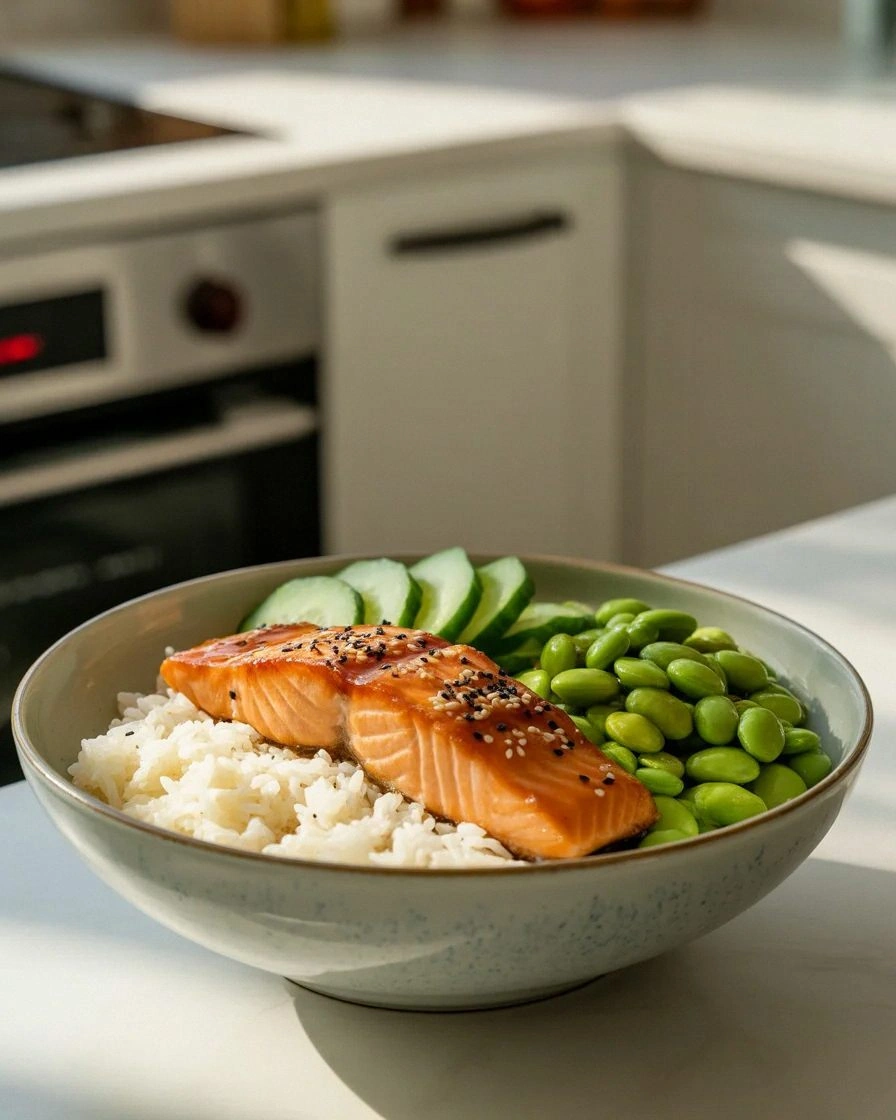
- Place the seared salmon fillet on top of the rice, then arrange the blanched vegetables around it. Drizzle any remaining glaze over the entire bowl, ensuring every bite is coated. The visual appeal is as important as the flavor—bright colors and glossy glaze create an Instagram‑ready plate.
- Sprinkle sliced scallions and toasted sesame seeds over the bowl for a burst of freshness and crunch. The scallions add a peppery note that cuts through the richness, while the sesame seeds bring a nutty aroma. Finish with a squeeze of lime if you’re feeling adventurous.
- Serve immediately, letting everyone dive in while the salmon is still warm and the glaze is glossy. The combination of textures—soft salmon, crisp veggies, fluffy rice—creates a satisfying mouthfeel that will leave your guests impressed.
That's it—you did it. But hold on, I've got a few more tricks that'll take this to another level. Keep reading for insider tips that will elevate your bowl from good to unforgettable.
Insider Tricks for Flawless Results
The Temperature Rule Nobody Follows
Many people bake salmon at 400°F (200°C) and end up with a dry center. The trick is to start at a higher temperature—425°F (220°C)—for the first 5 minutes to sear the surface, then lower to 375°F (190°C) to finish cooking gently. This two‑step method locks in moisture while still giving you that coveted caramelized crust. I tried this once on a full tray of fillets, and the difference was night and day.
Why Your Nose Knows Best
Before you start cooking, give the glaze a sniff. If it smells like sweet honey with a hint of ginger, it’s ready. If it smells too sharp or overly garlicky, let it simmer a bit longer to mellow the flavors. Your nose is your best ally in judging readiness, and it will save you from over‑seasoned sauces.
The 5‑Minute Rest That Changes Everything
Once the salmon is out of the pan, let it rest on a plate for five minutes. This allows the juices to redistribute, ensuring each bite is moist. Many chefs skip this step, resulting in a dry fillet. I’ve seen this trick turn a mediocre dish into a showstopper—just trust me, the rest matters.
Blanching vs. Steaming for Veggies
Steaming keeps veggies bright and crisp, but blanching in boiling water with a pinch of salt can give a slightly firmer bite. If you’re short on time, a quick blanch (2 minutes) followed by an ice bath stops the cooking process instantly, preserving color. Experiment to see which texture you prefer.
Rice: The Unsung Hero
Cook rice with a splash of sesame oil or a pinch of salt to add subtle flavor. Also, let the rice rest for 10 minutes after cooking; this step allows the grains to firm up, preventing mushiness when you add the glaze. I’ve found this simple tweak makes a big difference in overall texture.
Creative Twists and Variations
This recipe is a playground. Here are some of my favorite ways to switch things up:
Spicy Sriracha Kick
Add a tablespoon of sriracha to the glaze for a fiery twist that pairs beautifully with the sweet honey. The heat complements the salmon’s richness and adds a layer of complexity. Serve with a side of cucumber slices to cool the palate.
Citrus Burst with Yuzu
Replace rice vinegar with yuzu juice for a bright, tart flavor that elevates the glaze. Yuzu’s floral notes create a unique aroma, and the acidity balances the honey perfectly. This version is ideal for spring and summer gatherings.
Miso‑Infused Umami
Stir in a teaspoon of white miso paste into the glaze for a deeper umami profile. The miso adds depth without overpowering the sweetness. This variation works well with wild salmon, enhancing its natural flavors.
Pineapple Sweetness
Add diced fresh pineapple to the glaze for a tropical twist. The pineapple’s natural sugars caramelize, giving the sauce a caramel‑like sheen. Pair this with a side of coconut rice for a beach‑inspired bowl.
Mediterranean Flair
Swap snow peas for sliced kalamata olives and add a drizzle of extra‑virgin olive oil. The olives bring a briny depth, while the olive oil adds a silky finish. This version is a nod to Mediterranean flavors while still keeping the teriyaki essence.
Storing and Bringing It Back to Life
Fridge Storage
Store the bowl components separately in airtight containers. Keep the salmon, rice, and veggies in separate compartments to preserve texture. When ready to eat, reheat the salmon in a skillet for 2 minutes and steam the veggies for 1 minute. This method keeps the salmon moist and the veggies crisp.
Freezer Friendly
For freezer storage, assemble the bowl without the glaze and store in a freezer‑safe container. Freeze up to 2 months. To reheat, thaw overnight in the fridge, then microwave for 2 minutes, stirring halfway, or reheat in a skillet. Add a splash of water before reheating to create steam, restoring the rice’s fluffiness.
Best Reheating Method
The best way to revive this bowl is to reheat the salmon in a hot skillet for 1–2 minutes, then add a small splash of water and cover for 30 seconds. This trick steams the salmon, keeping it juicy, and the water creates steam that re‑softens the rice. Finish with a drizzle of fresh glaze for that glossy finish.