Love this? Pin it for later! 📌
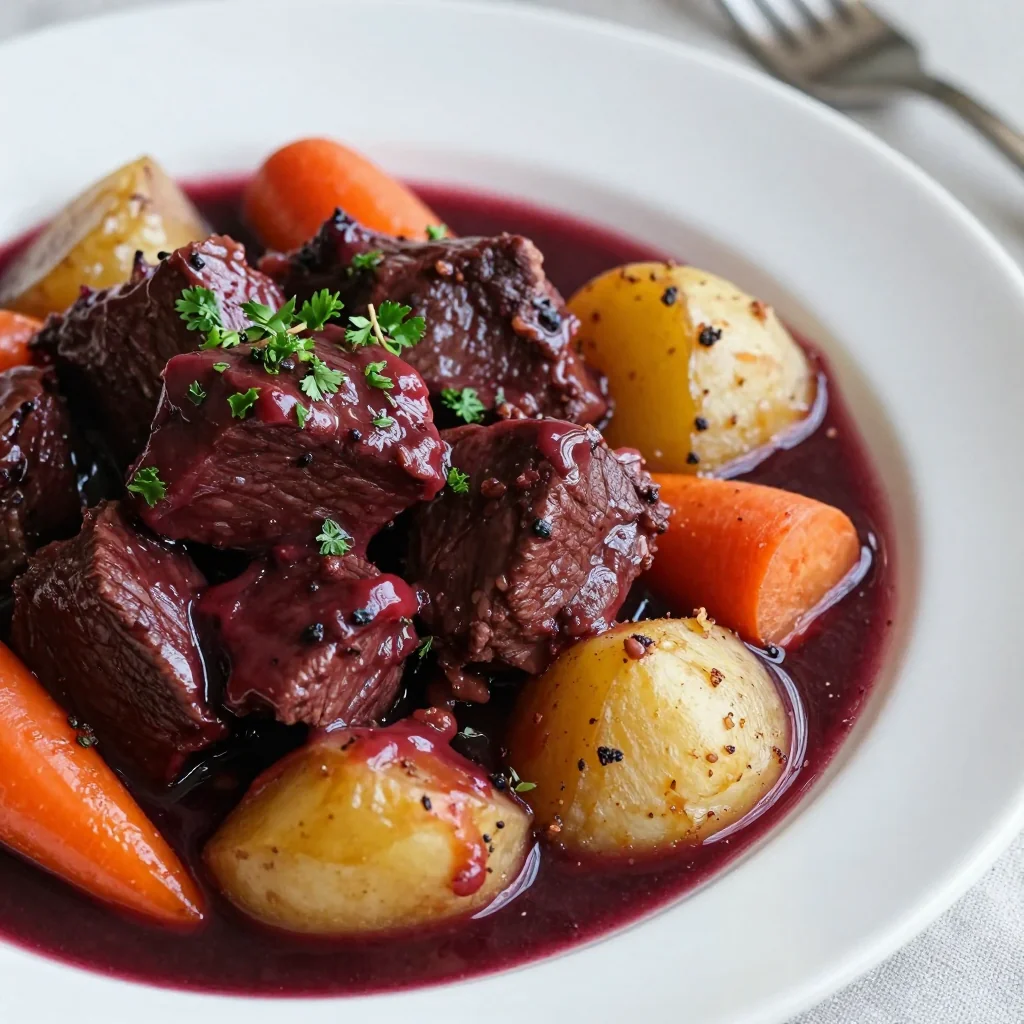
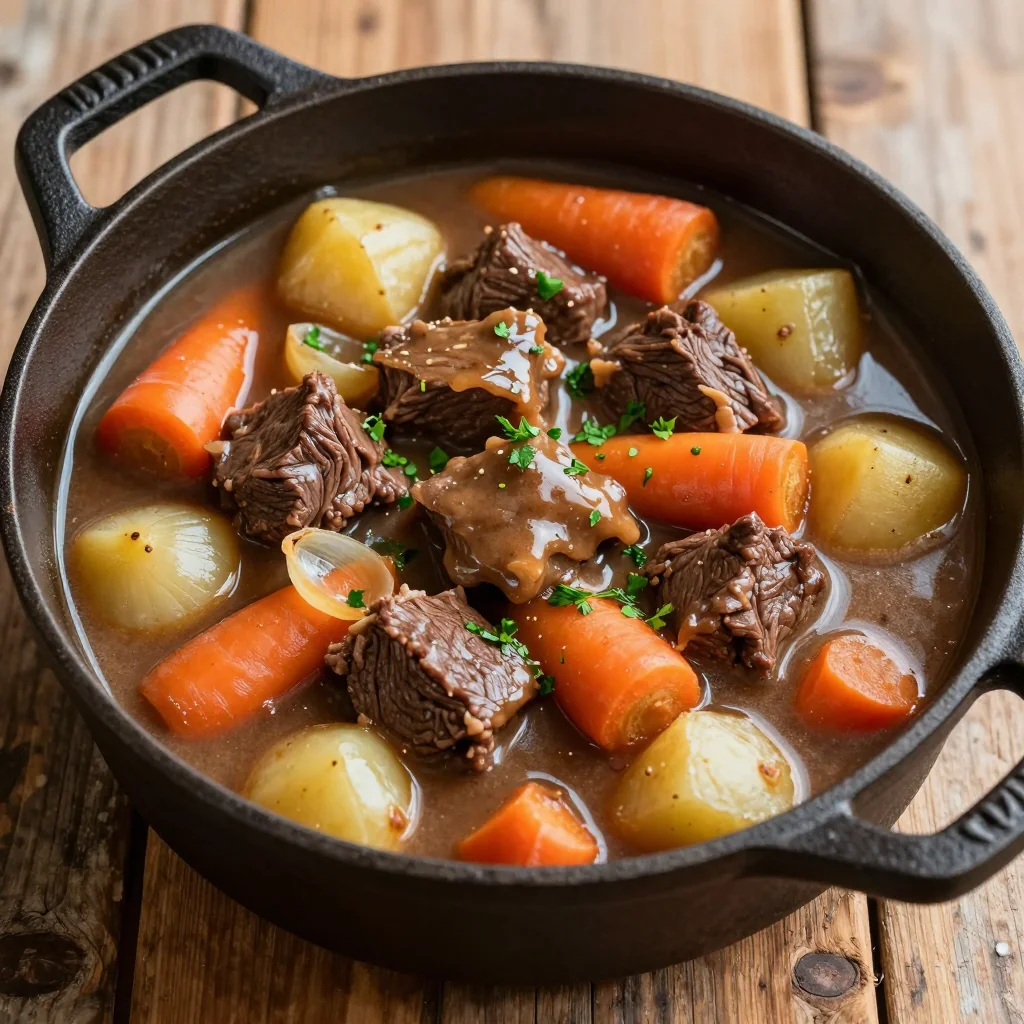
There's something magical about a pot of beef stew simmering away on the stove that instantly transports me back to my grandmother's cozy kitchen. The aroma of tender beef, earthy vegetables, and herbs wafting through the house is like a warm hug from the past. This isn't just any beef stew – it's the kind that makes you close your eyes with the first spoonful and sigh with contentment.
I remember winter Sundays at Grandma's house, where she'd start this stew before church and we'd return to find the entire farmhouse filled with the most incredible smell. She'd stand at her ancient gas stove, wearing her flour-dusted apron, stirring the pot with the same wooden spoon she'd used for decades. "Good things take time," she'd always say, and she was absolutely right.
This recipe has been passed down through three generations of my family, with each cook adding their own small touches. I've modernized it slightly (sorry, Grandma – I use a Dutch oven instead of your heavy-bottomed pot), but the soul remains the same. It's perfect for those bone-chilling winter evenings when you need something substantial, for feeding a crowd during the holidays, or for meal-prepping hearty lunches for the week ahead.
What makes this stew special isn't just the ingredients – though they're important – it's the method. The slow, gentle cooking that transforms tough beef into fork-tender morsels, the way the vegetables release their sweetness into the broth, and how the flavors meld together to create something far greater than the sum of its parts. This is comfort food at its finest, the kind that nourishes both body and soul.
Why This Recipe Works
- The Two-Step Browning Method: We brown the beef in batches to develop deep, complex flavors through the Maillard reaction, creating those beautiful fond bits that become the foundation of our rich gravy.
- Layered Vegetable Addition: Adding vegetables at different stages ensures each maintains its ideal texture – the onions and carrots get soft and sweet, while the potatoes stay perfectly tender without turning to mush.
- The Secret Ingredient: A splash of balsamic vinegar added at the end brightens all the flavors and adds a subtle complexity that makes people ask, "What makes this taste so special?"
- Low and Slow Philosophy: The gentle simmer for 2-3 hours allows the collagen in the beef to break down into gelatin, creating that luxurious, spoon-coating texture that defines an exceptional stew.
- Herb Timing: Adding fresh herbs at two different points – hardy herbs early for depth, delicate herbs at the end for brightness – creates a more complex flavor profile.
- The Overnight Advantage: Like many great stews, this one tastes even better the next day after the flavors have had time to marry and intensify in the refrigerator.
- Perfect Beef Selection: Using chuck roast cut into generous 2-inch pieces ensures each bite is substantial and maintains its integrity during the long cooking process.
Ingredients You'll Need
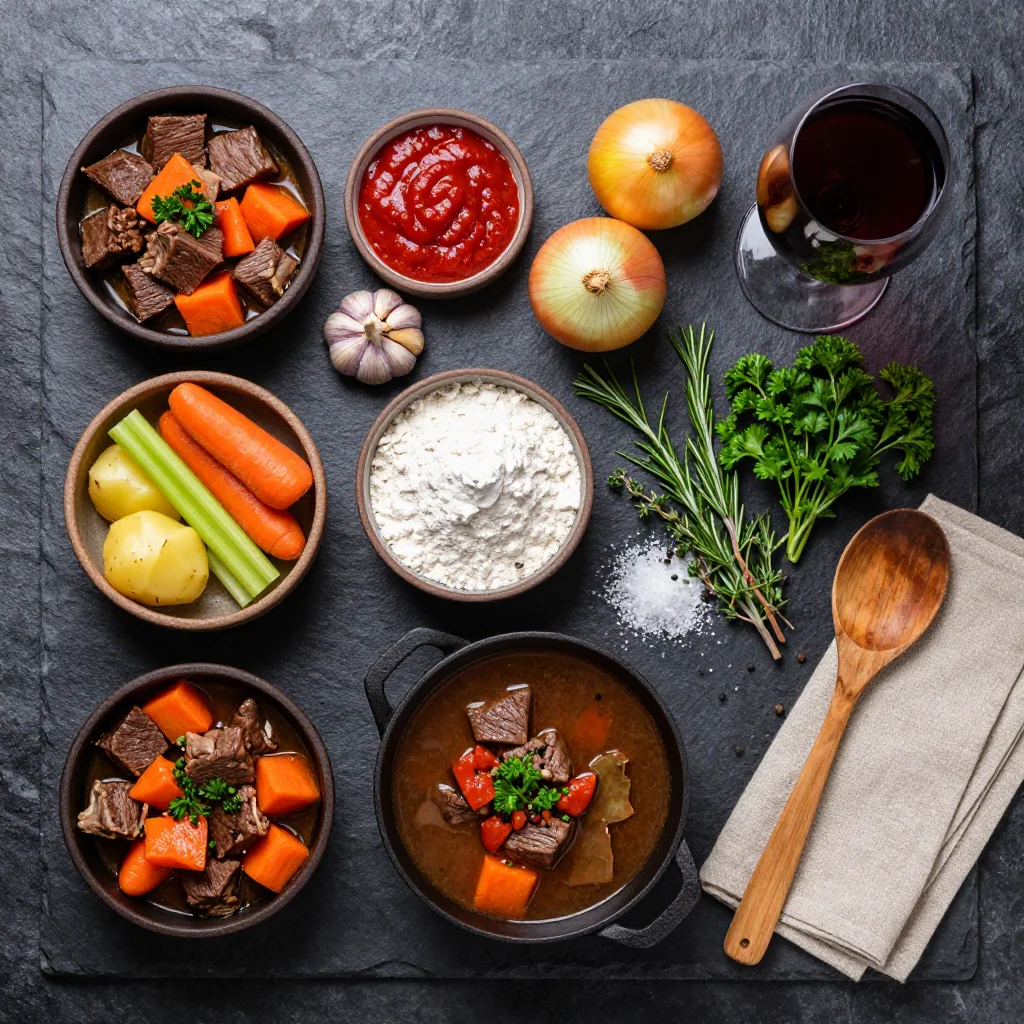
The beauty of this stew lies in its simplicity – humble ingredients transformed through time and technique into something extraordinary. Each component plays a crucial role in building layers of flavor that would make any grandmother proud.
For the Beef: You'll need 3 pounds of chuck roast, well-marbled with fat. This cut comes from the shoulder of the cow and is perfectly suited for long, slow cooking. The connective tissue breaks down into gelatin, creating that silky texture we all love. Look for pieces with good marbling – those white streaks of fat that melt during cooking and keep the meat moist. If you can't find chuck, bottom round or brisket work too, but adjust your cooking time accordingly.
The Holy Trinity of Vegetables: Two large yellow onions, four sturdy carrots, and three ribs of celery form the aromatic base. I prefer yellow onions for their balance of sweetness and savoriness. For carrots, choose the thicker, older ones from the grocery store – they're sweeter and hold up better during cooking than those baby carrots. Celery should be firm with fresh-looking leaves still attached.
Starchy Components: Three pounds of Yukon Gold potatoes give the stew body and substance. Their waxy texture means they won't fall apart during the long cooking process. Leave the skins on for extra flavor and nutrition – just give them a good scrub. You'll also need 2 tablespoons of tomato paste, which adds umami depth and helps thicken the stew.
Liquid Gold: Four cups of low-sodium beef broth forms the base of our gravy. I always recommend low-sodium so you can control the salt level. A cup of dry red wine adds complexity – use something you'd actually drink, not cooking wine. Grandma used whatever was open, usually a hearty cabernet or merlot. If you prefer not to cook with wine, substitute with additional broth and a tablespoon of Worcestershire sauce.
Herbs and Seasonings: Fresh thyme and rosemary are non-negotiable for me – dried just don't compare. You'll need 4 sprigs of thyme and 2 sprigs of rosemary. Two bay leaves add subtle background notes. For seasoning, kosher salt and freshly ground black pepper are essential. The larger crystals of kosher salt are easier to control and distribute more evenly.
The Finishing Touch: Two tablespoons of balsamic vinegar added at the end brightens all the flavors. It's Grandma's secret weapon – just a splash transforms the entire dish. Also, have some fresh parsley on hand for garnish and a pop of color.
How to Make Cozy Beef Stew That Tastes Like Grandma's Cooking
Prep and Season the Beef
Start by patting your 3 pounds of chuck roast very dry with paper towels – moisture is the enemy of good browning. Cut the meat into generous 2-inch pieces, keeping them uniform so they cook evenly. Season aggressively with 2 teaspoons of kosher salt and 1 teaspoon of black pepper. Toss to coat evenly. Let the beef sit at room temperature for 30 minutes while you prep your vegetables – this ensures more even cooking and better browning.
Sear the Beef in Batches
Heat 2 tablespoons of vegetable oil in a large Dutch oven over medium-high heat until shimmering. Working in batches (don't crowd the pan!), sear the beef on all sides until deeply browned, about 3-4 minutes per side. This isn't the time to rush – those brown bits (fond) stuck to the bottom are pure flavor gold. Transfer seared beef to a plate. If the pan looks dry between batches, add another tablespoon of oil. Don't worry about the browned bits on the bottom – we'll deglaze those next.
Build the Aromatic Base
Reduce heat to medium and add your diced onions to the pot. Scrape up those beautiful brown bits as the onions release their moisture. Cook until the onions are softened and starting to turn golden, about 5 minutes. Add the minced garlic and tomato paste, stirring constantly for 1 minute until fragrant. The tomato paste should darken slightly – this caramelization adds incredible depth to our stew.
Deglaze with Wine
Pour in your cup of red wine, scraping vigorously with a wooden spoon to release every last bit of flavor from the bottom of the pot. Let the wine bubble away for 2-3 minutes, reducing slightly. This step isn't about adding alcohol flavor – the alcohol cooks off, leaving behind complex fruity notes that complement the beef beautifully. If you're abstaining from alcohol, substitute with beef broth and a tablespoon of Worcestershire sauce.
Return the Beef and Add Broth
Return all the seared beef (and any accumulated juices) to the pot. Add the beef broth, ensuring the meat is just covered. Toss in your thyme, rosemary, and bay leaves. The herbs should be submerged so they can properly infuse the liquid. Bring everything to a gentle simmer – you should see small bubbles breaking the surface, not a rolling boil. Boiling will make the meat tough and stringy.
The Long, Slow Simmer
Cover the pot with a tight-fitting lid, leaving just a small gap for steam to escape. Reduce heat to low and let it simmer gently for 1.5 hours. This is where the magic happens – the tough connective tissue in the beef slowly breaks down into gelatin, creating that silky mouthfeel. Check occasionally, giving it a gentle stir. If it looks like it's reducing too much, add a splash more broth or water.
Add the Vegetables
After 1.5 hours, add your carrots, celery, and potatoes. These need less cooking time than the beef, and adding them now ensures they maintain some texture. Stir gently to combine, being careful not to break up the potatoes. The stew will seem thick at this point – that's perfect. As the vegetables release their moisture, they'll add more liquid. Cover again and simmer for another 45 minutes to 1 hour, until the vegetables are tender and the beef is fork-tender.
Finish and Season
Remove the pot from heat and fish out the herb stems and bay leaves. Stir in the balsamic vinegar – this is Grandma's secret that brightens all the flavors. Taste and adjust seasoning with salt and pepper. The stew should be thick enough to coat a spoon but still spoonable. If it's too thick, thin with a splash of broth. If too thin, simmer uncovered for 10-15 minutes. Let it rest for 10 minutes before serving – this allows the flavors to settle and the temperature to become perfect for eating.
Expert Tips
Temperature Control
Maintaining the right simmer is crucial. Too hot and your meat will be tough; too cool and it won't cook properly. You want gentle bubbles breaking the surface occasionally. If your stove runs hot, use a flame tamer or place the pot on a smaller burner.
The Overnight Advantage
This stew tastes even better the next day! Make it ahead, let it cool completely, refrigerate overnight, and reheat gently. The flavors meld and intensify, creating an even more complex taste. Plus, any excess fat solidifies on top for easy removal.
Uniform Cutting
Cut your vegetables into uniform sizes so they cook evenly. I like my carrots and celery cut on the bias into 1-inch pieces – they look elegant and have more surface area for flavor development. Keep potatoes in 2-inch chunks so they don't disappear.
Thickening Tricks
If your stew needs thickening, mash a few potato pieces against the side of the pot and stir them in. The starch naturally thickens the gravy. Alternatively, mix 2 tablespoons of flour with 2 tablespoons of butter, roll into small balls, and stir into the hot stew.
Freezer Success
This stew freezes beautifully for up to 3 months. Portion into freezer bags, lay flat to freeze, then stack like books. Thaw overnight in the refrigerator and reheat gently. The potatoes may be slightly softer but the flavor remains incredible.
Meat Selection
If chuck roast isn't available, look for well-marbled stew meat. Avoid pre-cut "stew beef" that's too lean – it will dry out. You want pieces with visible fat and connective tissue. Ask your butcher to cut it fresh if possible.
Variations to Try
Irish Stout Version
Replace the red wine with a cup of Guinness or another dark stout. The beer adds incredible depth and a slight bitterness that pairs beautifully with beef. Add some parsnips along with the carrots for an authentic Irish touch.
Mediterranean Style
Add a can of diced tomatoes, swap the herbs for oregano and bay leaves, and include some olives at the end. Use lamb instead of beef for a Greek-inspired version. A squeeze of lemon brightens everything.
Mushroom Lover's
Add a pound of cremini mushrooms, quartered, when you add the other vegetables. The mushrooms release their umami-rich juices and create an even more complex gravy. A splash of soy sauce enhances the mushroom flavor.
Autumn Harvest
Swap half the potatoes for sweet potatoes or butternut squash. Add some turnips or rutabaga for an earthy flavor. A pinch of cinnamon and nutmeg gives it that cozy autumn spice profile that warms you from the inside.
Storage Tips
Storage Guidelines
Properly stored, this stew will keep in the refrigerator for 4-5 days in an airtight container. Always let it cool completely before refrigerating – putting hot stew directly in the fridge can raise the temperature inside and potentially cause food safety issues.
Refrigerator Storage: Transfer cooled stew to airtight containers, leaving about an inch of space at the top. The stew will thicken as it cools, so you might need to add a splash of broth or water when reheating. Store any dumplings or biscuits separately to prevent them from getting soggy.
Freezer Instructions: This stew freezes exceptionally well for up to 3 months. I recommend portioning it into meal-sized freezer bags – lay them flat to freeze, then you can stack them like books to save space. Be sure to label with the date and contents. Thaw overnight in the refrigerator for best results, though you can also thaw in the microwave using the defrost setting.
Reheating Methods: For best results, reheat gently on the stovetop over medium-low heat, stirring occasionally. Add broth or water as needed to achieve your desired consistency. If reheating from frozen, you can place the frozen stew directly in a pot with a splash of water, cover, and heat over low, stirring occasionally until heated through. The microwave works in a pinch – use 50% power and stir every minute to ensure even heating.
Make-Ahead Magic: This stew actually benefits from being made a day ahead. The flavors meld and intensify, creating an even more delicious result. Make it through the end of step 7, let it cool, refrigerate overnight, and finish with the balsamic vinegar and fresh herbs when reheating to serve.
Frequently Asked Questions
Tough beef usually means either the heat was too high or not enough time. Stew meat needs to cook low and slow to break down collagen. If it's tough, keep cooking! It might need another hour or two. Also, make sure you're using the right cut – chuck roast is ideal. Lean cuts like sirloin will always be tough in a stew.
Absolutely! Brown the beef and sauté the aromatics on the stovetop first (steps 2-4) – this step is crucial for flavor development. Then transfer everything to your slow cooker, add the broth and herbs, and cook on low for 7-8 hours or high for 4-5 hours. Add the vegetables during the last 2 hours of cooking to prevent them from getting mushy.
A heavy-bottomed pot with a tight-fitting lid works well too. Avoid thin pots as they can create hot spots and burn the stew. You could also use a slow cooker insert on the stovetop if it's safe for direct heat. The key is even heat distribution and a lid that seals well to prevent too much evaporation.
Several methods work: Mash some potato pieces against the pot side and stir them in. Make a beurre manié by mixing equal parts softened butter and flour (2 tablespoons each), roll into small balls, and whisk into the hot stew. Simmer for 5-10 minutes. Or remove 1 cup of stew, blend until smooth, and stir back in. Cornstarch slurry (1 tablespoon cornstarch mixed with 1 tablespoon cold water) works too.
Yes! Drop dumplings on top during the last 15-20 minutes of cooking. Make sure the stew is simmering gently, cover tightly after adding dumplings, and don't peek! The steam cooks them. For extra flavor, add some fresh herbs to your dumpling dough. Serve immediately once dumplings are puffed and cooked through.
For cooking, use a dry red wine like Cabernet Sauvignon, Merlot, or Cotes du Rhone. For drinking, serve the same wine you cooked with! A hearty red like Zinfandel, Syrah, or Malbec complements the rich beef beautifully. If you prefer white, a full-bodied Chardonnay works surprisingly well. Avoid sweet wines in both cooking and serving.
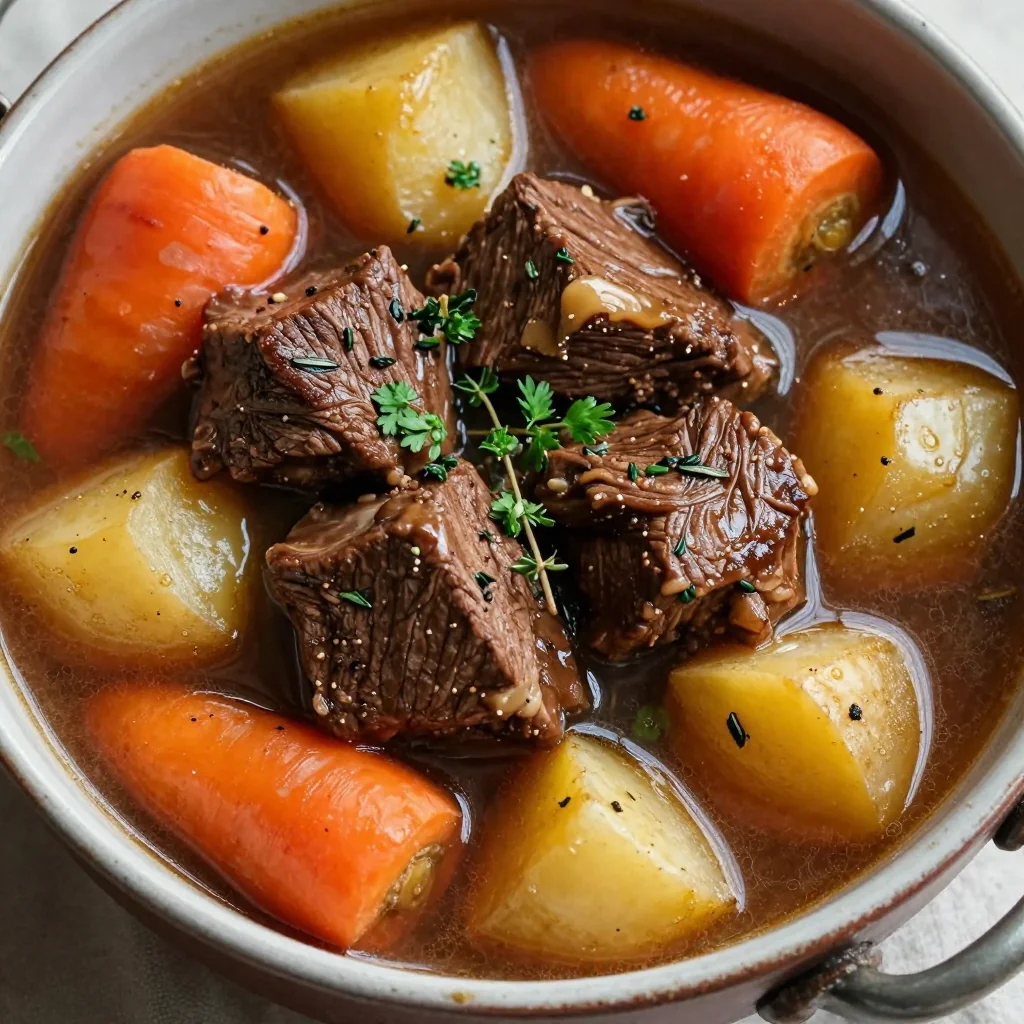
Cozy Beef Stew That Tastes Like Grandma's Cooking
Ingredients
Instructions
- Prep the beef: Pat beef dry, season with salt and pepper, and let sit at room temperature for 30 minutes.
- Brown the meat: Heat 2 tbsp oil in Dutch oven. Brown beef in batches, 3-4 minutes per side. Set aside.
- Build the base: Add onions, cook 5 minutes until softened. Stir in garlic and tomato paste, cook 1 minute.
- Deglaze: Pour in wine, scrape up browned bits, and simmer 2-3 minutes.
- Simmer: Return beef to pot, add broth and herbs. Bring to gentle simmer, cover, and cook 1.5 hours.
- Add vegetables: Stir in carrots, celery, and potatoes. Cover and simmer 45-60 minutes more.
- Finish: Remove herb stems and bay leaves. Stir in balsamic vinegar, season to taste, and garnish with parsley.
Recipe Notes
This stew tastes even better the next day! Make ahead and reheat gently. For thicker stew, mash some potatoes against the pot side. Freezes well for up to 3 months.