Love this? Pin it for later! 📌
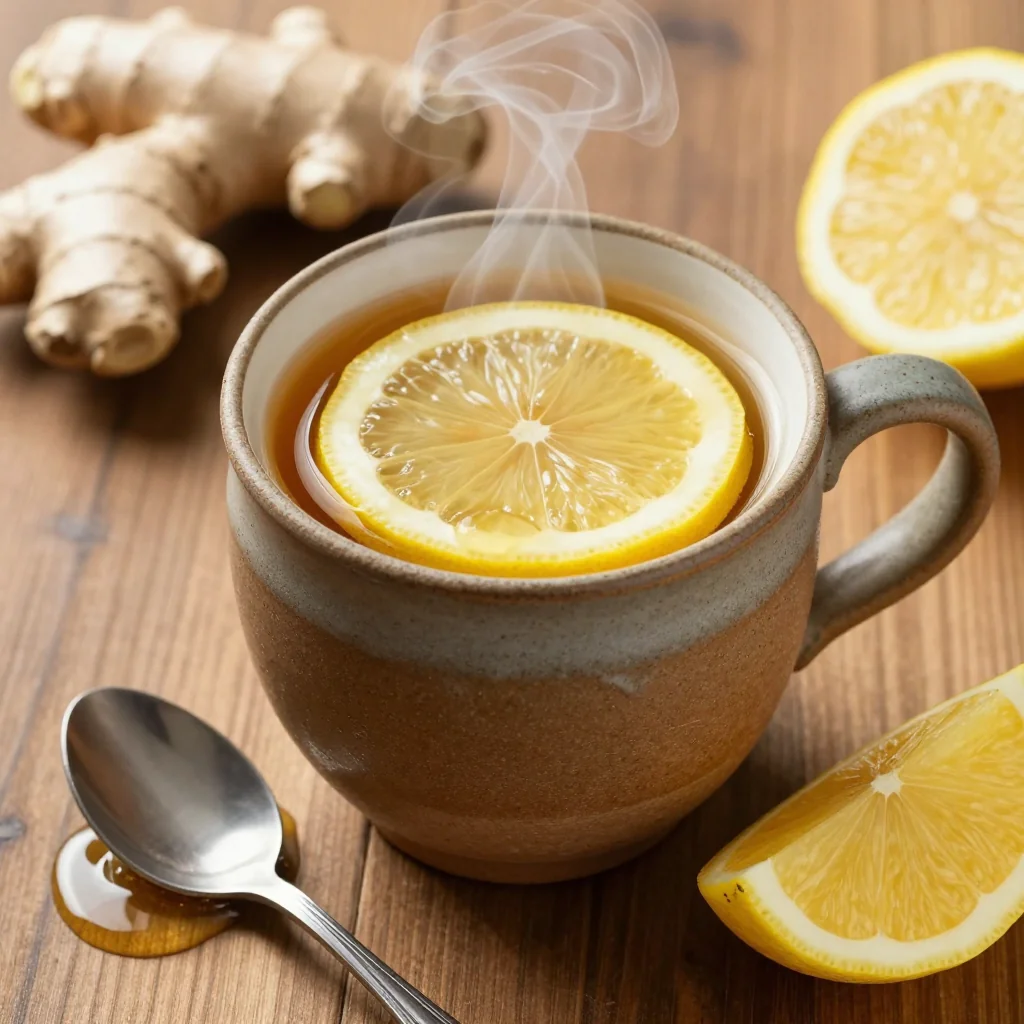
There’s a moment every winter—usually just after the holidays—when the sky turns the color of old pewter and the house feels drafty no matter how high I crank the thermostat. That’s when I abandon the coffee pot, bypass the cocoa, and head straight for the ginger jar on the top shelf. Ten minutes later I’m curled under a wool throw, hands wrapped around a steaming mug of ginger tea brightened with a squeeze of lemon and a slow drizzle of golden honey. The first sip feels like someone pressed a warm washcloth to my soul; the second convinces me that every chilly day should begin this way.
I started brewing this particular combination during graduate school, when late-night study sessions and a diet of instant ramen left my immune system hanging by a thread. My grandmother, a retired nurse who swore by kitchen pharmacy, would call every evening to remind me to “steep some ginger for your lungs.” I rolled my eyes then, but fifteen years later her voice still nudges me toward the cutting board whenever I feel the sniffles coming on. The recipe has evolved—organic lemons instead of the waxy supermarket kind, raw honey from the farmer’s market, a habit of grating the ginger rather than slicing—but the intent remains: comfort, warmth, and a gentle nudge toward wellness.
What I love most is that this isn’t just a feel-good drink; it’s a legitimate main-dish beverage. On days when my stomach is unsettled or my appetite has gone AWOL, a large mug plus a slice of buttered sourdough is supper enough. The spicy ginger stimulates saliva and gastric juices, the lemon’s acidity perks up palate-fatigued taste buds, and the honey’s fructose and glucose hit the bloodstream quickly, restoring flagging energy without the jittery spike of refined sugar. In short, it’s the rare drink that can stand at the center of the table and still feel completely nourishing.
Why This Recipe Works
- Whole-root ginger: Fresh rhizome delivers volatile oils (gingerol & zingiberene) that dried powder can’t match.
- Low simmer, not boil: Keeps the citrus bright and prevents the honey’s enzymes from degrading.
- Double-strain technique: Removes every fibrous bit, giving a silky mouthfeel that encourages slow sipping.
- Ratios that scale: The 3:1:1 water/ginger/lemon formula works whether you’re making one mug or a party-sized thermos.
- Functional food status: Each mug offers ~1 g gingerol, shown to reduce inflammatory markers and ease nausea.
- Zero caffeine: Safe for kids, pregnancy, and late-night wind-downs without sacrificing flavor complexity.
Ingredients You'll Need
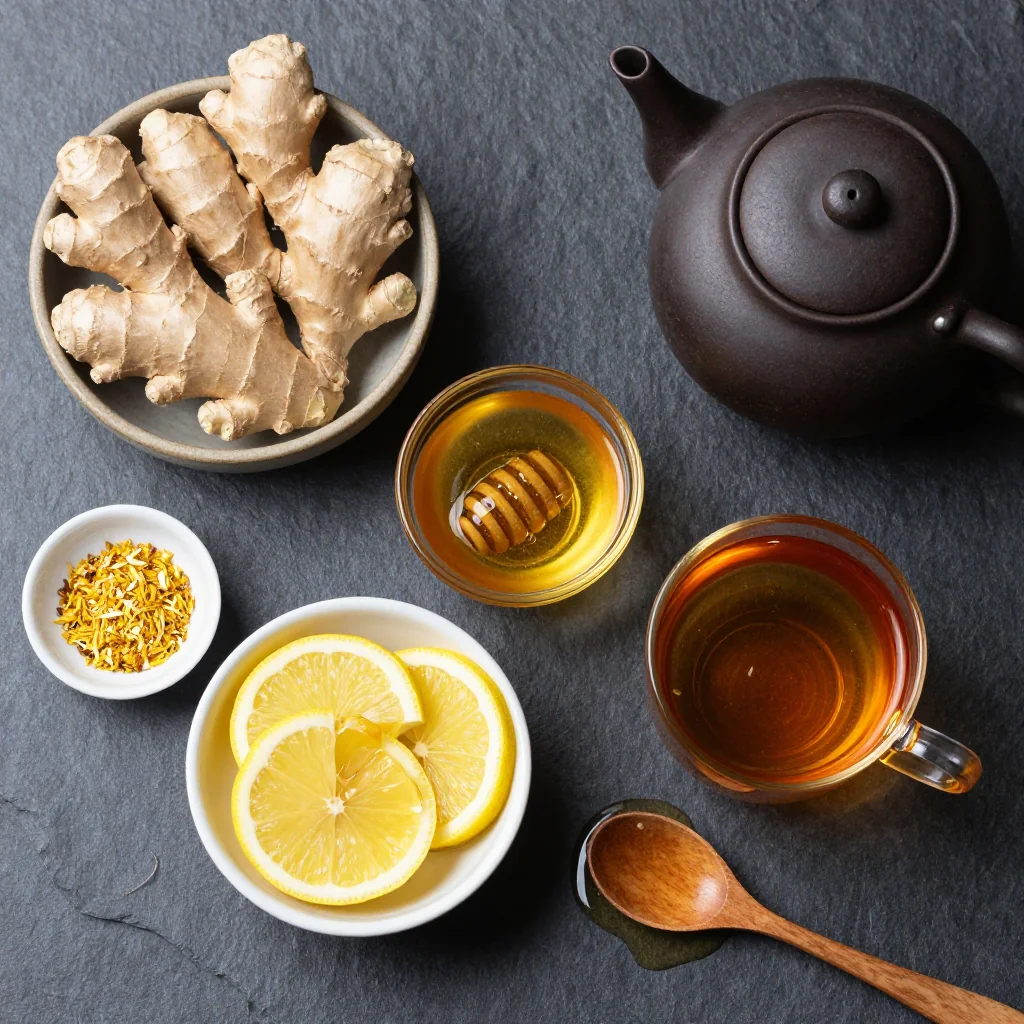
Quality ingredients matter here because the recipe is so simple—there’s nowhere for mediocre produce to hide. Look for ginger that feels heavy for its size, with taut, glossy skin and no sunken spots. If the rhizome has begun to wrinkle or sprout green eyes, the volatile oils have already started to oxidize, which translates to flat, musty tea. When possible, buy organic; conventionally grown ginger can be heavily irradiated to prevent sprouting, further diminishing flavor.
Lemons should feel firm and fragrant at room temperature. Roll them on the counter before slicing; this bursts the juice vesicles and yields up to 20 % more liquid. If you can only find thick-skinned lemons (common in winter), zest a teaspoon of the peel into the pot; the limonene in the oil glands amplifies citrus perfume without extra acidity.
Raw, unpasteurized honey is worth the splurge. Heat destroys the antimicrobial hydrogen-peroxide activity and the pollen-derived enzymes that help modulate seasonal allergies. If your budget restricts you to grocery-store honey, choose one labeled “True Source Certified” to avoid syrupy fillers. Darker honeys—buckwheat, chestnut—add molasses notes that pair beautifully with ginger’s peppery heat, while lighter clover honey keeps the flavor profile bright and meadow-sweet.
Filtered water is non-negotiable in my kitchen. Chlorine and chloramine in tap water react with phenolic compounds, creating faint medicinal off-flavors. If you don’t own a filter, leave a jug of tap water on the counter for 4 h; most residual disinfectants evaporate.
How to Make Warm Ginger Tea With Lemon And Honey Benefits
Scrub & Slice the Ginger
Rinse 3 oz (85 g) fresh ginger under cool water, scraping away any dirt with the back of a spoon—this preserves the papery skin where many aromatic oils live. Slice into ⅛-inch coins; thinner slices expose more surface area, giving a stronger brew in less time. If you’re sensitive to spice, smash the coins with the flat of a knife; this releases flavor while leaving fibers large enough to strain out easily.
Simmer, Don’t Boil
Combine ginger with 4 cups cold filtered water in a small saucepan. Slowly bring to a bare simmer—look for occasional bubbles, not a rolling boil. Reduce heat to low, cover partially, and steep 12 min. Temperatures above 208 °F begin to convert gingerol to zingerone, muting heat and adding sweetness, so keep the flame gentle.
Add Lemon Off-Heat
Remove pot from burner and immediately squeeze in ¼ cup fresh lemon juice (about 1½ large lemons). Waiting until the liquid cools to 180 °F protects vitamin C and prevents the pectin in lemon pulp from turning the tea cloudy.
Strain Twice
Set a fine-mesh sieve over a teapot or heat-proof jug. Line with a single layer of cheesecloth and pour tea slowly. Gather the cloth, twist, and gently press solids to extract every last drop without forcing fibrous bits through. Rinse the sieve and repeat for an exceptionally clear liquor.
Sweeten to Taste
Stir in 2 Tbsp raw honey while the tea is between 140 °F and 160 °F—warm enough to dissolve but cool enough to preserve enzymes. Start with 1 Tbsp; you can always add more. Whisk briskly; honey’s viscosity means it sinks and can scorch on the pot bottom if left unattended.
Serve in Pre-Warmed Mugs
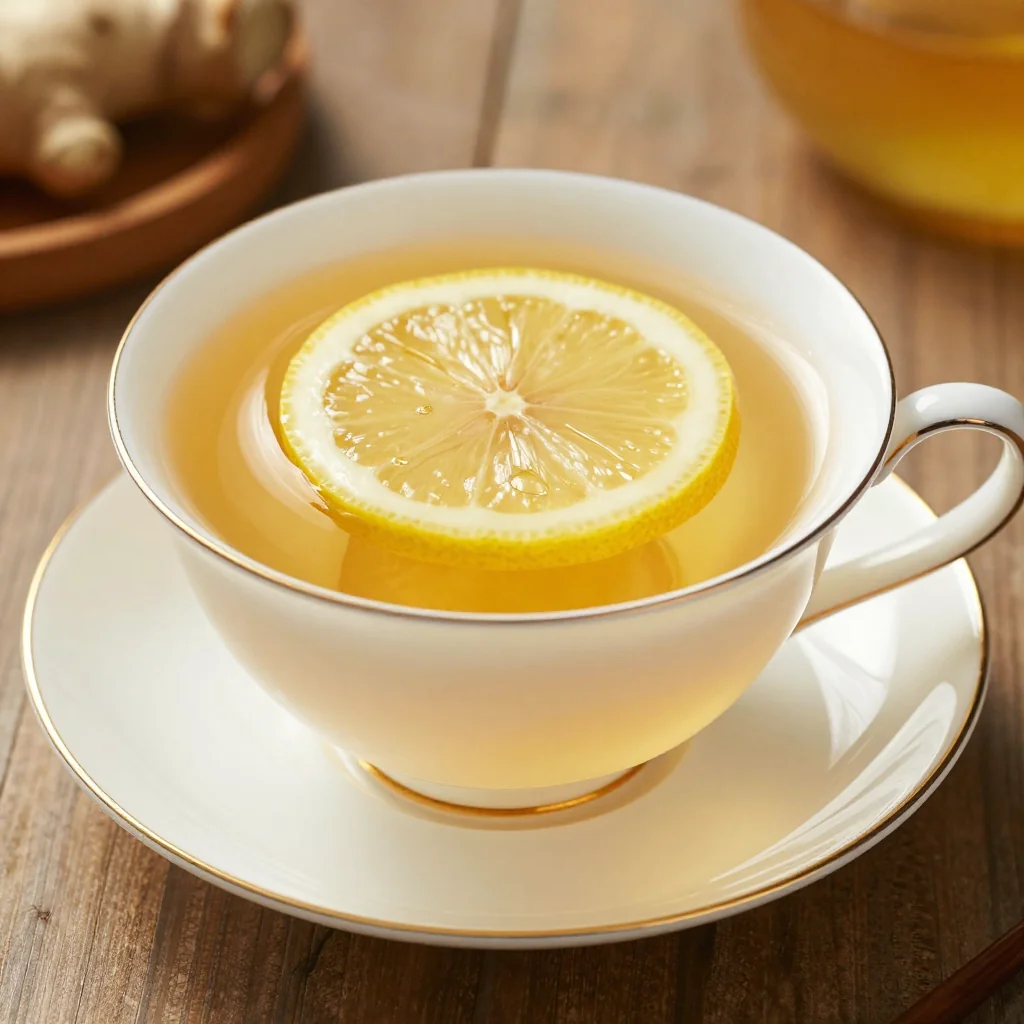
Rinse ceramic mugs with boiling water; this prevents the tea from cooling on contact. Ladle 8 oz per serving, garnish with a thin wheel of lemon, and offer additional honey on the side—palates vary, and some guests crave more sweetness as the drink cools.
Expert Tips
Microplane Trick
For ultra-potent tea, freeze the ginger for 20 min, then microplane directly into the pot. Freezing ruptures cell walls, releasing more juice and cutting simmer time to 6 min.
Low-FODMAP Swap
Replace honey with 1 tsp maple syrup plus ¼ tsp monk-fruit concentrate to keep sweetness without fructans that trigger IBS symptoms.
Iced Variation
Brew double-strength, chill over an ice bath, then serve over rock salt–rimmed glasses with sparkling water for a zero-proof ginger “mojito.”
Thermos Hack
Add a thin slice of peeled apple to your travel mug; the pectin keeps the honey evenly dissolved and prevents a sticky bottom layer.
Kid-Friendly Chill
Cool tea to 100 °F, then freeze in popsicle molds. The resulting ice pops soothe sore throats and keep little ones hydrated.
Latte Upgrade
Whisk ¼ cup frothed oat milk with ⅛ tsp turmeric and float on top for a golden “ginger latte” that rivals any café version.
Variations to Try
-
Citrus Medley: Swap half the lemon juice for blood-orange or yuzu juice; garnish with a strip of zest for color contrast.
-
Herbal Boost: Add 1 tsp dried chamomile or lemon balm during simmering for extra calming properties.
-
Chai Spice: Bruise 2 cardamom pods, 3 cloves, and a cinnamon stick; simmer with the ginger for a winter-warmer twist.
-
Sugar-Free: Replace honey with 2 pitted Medjool dates blended into ¼ cup hot tea, then stirred back into the pot.
-
Fire Cider Lite: Add 1 small sliced jalapeño during simmer for a metabolic kick that doesn’t overpower.
Storage Tips
Because the tea contains fresh citrus enzymes, it’s best consumed within 24 h. That said, you can stretch it safely to 72 h if you follow these parameters: Cool the strained tea to 70 °F within 2 h using an ice bath, then transfer to a glass jar with a tight plastic lid (metal can react with lemon). Refrigerate at ≤40 °F. Reheat single portions to 175 °F; do not boil again or the honey will caramelize and the lemon turns bitter.
For longer storage, freeze the tea in 1-cup silicone molds. Once solid, pop out the cubes and store in a zip-top bag for up to 2 months. Drop 2 cubes into a mug of hot water for instant ginger-lemon “tea concentrate.”
Never store with honey already mixed if you plan to freeze; the high fructose content lowers the freezing point and creates a slushy mess. Instead, freeze the ginger-lemon base and stir in fresh honey after reheating.
Frequently Asked Questions
Warm Ginger Tea With Lemon And Honey Benefits
Ingredients
Instructions
- Combine ginger & water: Place sliced ginger and water in a small saucepan. Slowly heat to a bare simmer over medium-low.
- Simmer: Reduce heat to low, cover partially, and steep 12 min.
- Add lemon: Remove from heat; stir in lemon juice (and zest if using).
- Strain: Double-strain through cheesecloth-lined sieve into a teapot or heat-proof jug.
- Sweeten: When tea cools to 160 °F, whisk in honey until dissolved.
- Serve: Pour into pre-warmed mugs; garnish with lemon wheels. Offer extra honey on the side.
Recipe Notes
Avoid boiling to preserve delicate citrus oils and honey enzymes. Reheat single servings only; repeated boiling dulls flavor.