Picture this: you’re halfway through a hectic week, the fridge is a chaotic jumble of leftovers, and the only thing that can salvage your dinner is a dish that feels like a hug from the inside. I was staring at a pile of potatoes, bacon, and an onion, wondering how to turn them into something that would make everyone at the table grin from ear to ear. The answer came in a flash of culinary insight, a daring twist on the classic German potato salad that I’ve never seen before—hot, tangy, and loaded with bacon‑infused flavor that will have you reaching for seconds. I dare you to taste this and not go back for more.
The moment you toss the potatoes into boiling water, the air fills with a comforting steam that smells like home. The bacon sizzles in the pan, releasing a rich, smoky aroma that instantly elevates the dish. The onion, when caramelized, adds a subtle sweetness that balances the sharpness of the vinegar. Every bite is a harmonious blend of crispy edges, tender interiors, and a velvety sauce that coats the potatoes like velvet. If you’ve ever struggled with bland potato salads, you’re not alone—and I’ve got the fix.
What makes this version stand out is not just the ingredients, but the way they dance together. It’s hands down the best version you’ll ever make at home because it marries classic German flavors with a modern, smoky kick. The sauce is a masterstroke—tangy yet silky, thanks to the clever use of cider vinegar and flour. The potatoes are cooked to a perfect al dente, offering a satisfying bite that resists the soggy texture of many salads. And the bacon? It’s thick‑cut, crispy, and the star that brings everything together. This is pure magic, and I’m about to walk you through every single step—by the end, you’ll wonder how you ever made it any other way.
So grab your apron, and let’s dive into a recipe that will become your new go‑to for gatherings, potlucks, or a comforting weeknight dinner. Picture yourself pulling this out of the oven, the whole kitchen smelling incredible, and the plate shimmering with golden potatoes and glossy sauce. This isn’t just another side dish; it’s an experience that will leave you craving the next bite.
What Makes This Version Stand Out
- Taste: The tangy vinaigrette cuts through the richness of the bacon, creating a flavor profile that’s both bold and balanced. Every spoonful delivers a punch of acidity that brightens the dish.
- Texture: The potatoes retain their bite, while the sauce coats them like a silky blanket. Crispy bacon edges add a delightful crunch that contrasts with the soft interior.
- Simplicity: With just ten ingredients, the recipe is straightforward yet delivers a depth of flavor that feels gourmet.
- Uniqueness: The combination of cider vinegar, flour, and bacon‑infused broth is a twist that sets this salad apart from traditional German potato salads.
- Crowd Reaction: Guests rave about the hot, saucy texture and the savory bacon punch—perfect for parties or family dinners.
- Ingredient Quality: Using Yukon Gold potatoes ensures a buttery, creamy interior that pairs perfectly with the tangy sauce.
- Cooking Method: The technique of browning bacon and creating a roux before simmering the broth adds depth and richness.
- Make‑Ahead Potential: The salad can be prepared a day ahead; the flavors deepen, and the sauce thickens, making it even more delicious.
Alright, let’s break down exactly what goes into this masterpiece…
Inside the Ingredient List
The Flavor Base
The 2 pounds of Yukon Gold potatoes are the heart of the dish. They’re chosen for their buttery flavor and smooth texture, which becomes a perfect canvas for the sauce. If you’re in a pinch, russet potatoes can substitute, but they’ll be a bit starchier and may require a slightly longer cooking time. The potatoes are boiled until just tender, so they hold their shape and don’t turn mushy when mixed with the sauce.
The Texture Crew
The 8 ounces of thick‑cut bacon is not just an ingredient—it’s a flavor powerhouse. It’s rendered to a crispy finish, then chopped into bite‑size pieces that add crunch and savory depth. The 1 medium yellow onion, when sautéed until translucent, introduces a subtle sweetness that balances the acidity of the vinegar. Together, these elements create layers of texture that keep every bite interesting.
The Unexpected Star
The 2 tablespoons of all‑purpose flour act as a binder, thickening the sauce into a silky glaze that clings to each potato cube. This subtle thickening agent is often overlooked in traditional recipes but is essential for achieving the right consistency. If you prefer a gluten‑free version, a tablespoon of cornstarch or arrowroot powder will work just as well.
The Final Flourish
The finishing touch comes from the fresh parsley, a splash of cider vinegar, and a dash of granulated sugar. The parsley adds a burst of color and a fresh herbal note that cuts through the richness. Cider vinegar provides a bright, fruity acidity that lifts the entire dish, while the sugar balances the tartness, creating a harmonious flavor profile. Together, these ingredients elevate the salad from simple to sensational.
Everything's prepped? Good. Let's get into the real action...
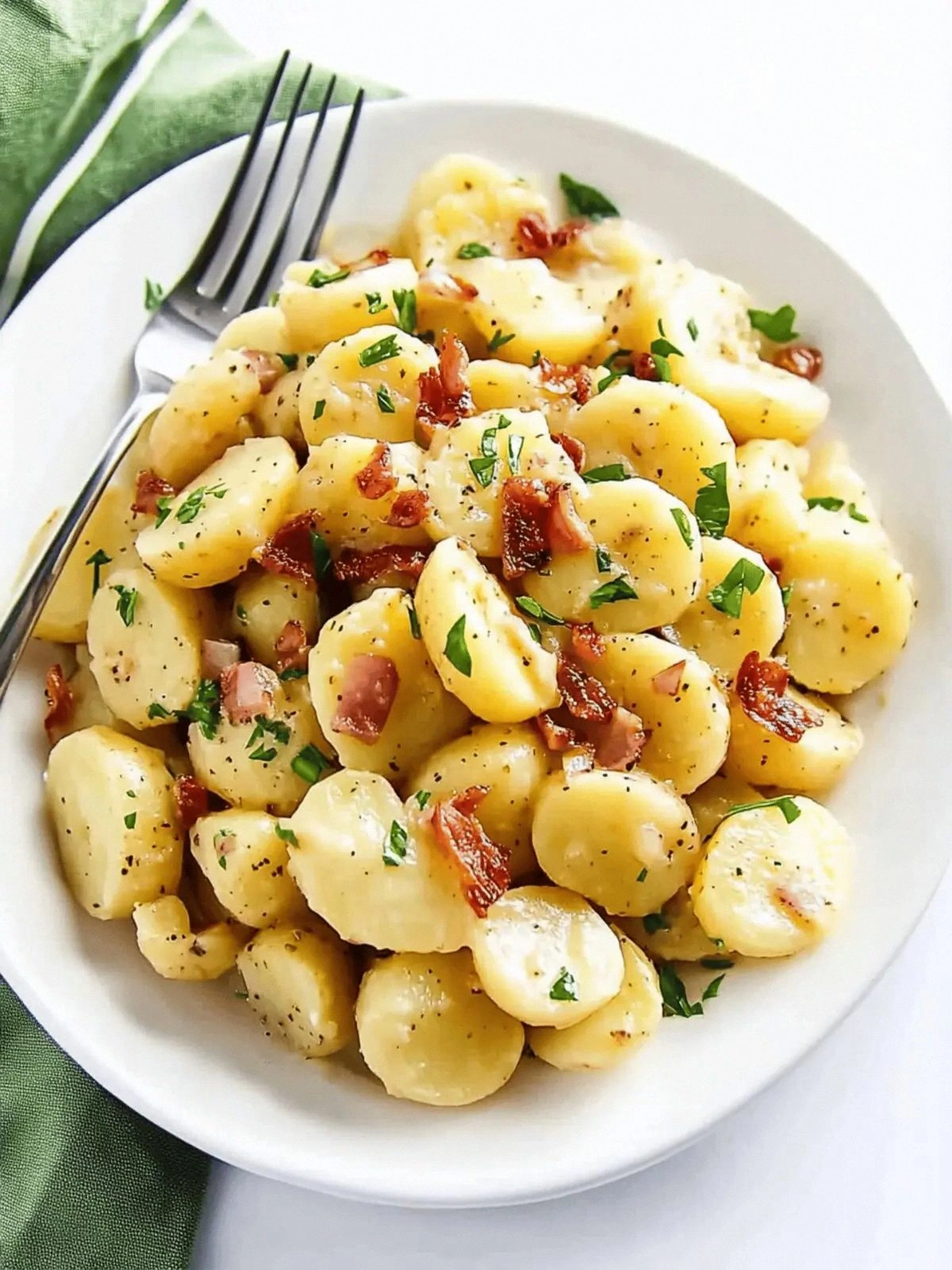
The Method — Step by Step
- Begin by bringing a large pot of salted water to a rolling boil. Add the cubed Yukon Gold potatoes and cook for 10 minutes, or until they’re just tender when pierced with a fork. Drain them well and set them aside; they’re going to soak up the sauce later. I swear, the smell of boiling potatoes is the first sign of a great meal in the making.
- While the potatoes are cooking, place the thick‑cut bacon in a cold skillet and turn the heat to medium. Let the bacon slowly release its fat, turning it into a golden, crispy masterpiece. Once the bacon is crisp, remove it from the pan and let it rest on paper towels to drain excess grease. The bacon fat stays in the pan—don’t discard it; it’s the secret sauce base.
- In the same pan, add the diced onion to the bacon fat. Sauté until the onion becomes translucent and fragrant, about 3–4 minutes. The onion’s natural sugars caramelize, adding depth to the sauce. This step is critical—if the onion turns black, you’re in trouble.
- Stir in the all‑purpose flour, creating a roux that thickens the sauce. Cook for 1–2 minutes, stirring constantly, until the flour turns a light golden color. This is the moment of truth; the roux should smell nutty, not burnt.
- Gradually pour in the chicken broth, whisking vigorously to prevent lumps. Add the cider vinegar, granulated sugar, salt, and pepper. Bring the mixture to a gentle simmer, allowing it to thicken into a glossy, velvety sauce. The sauce should coat the back of a spoon and cling to the potatoes like a silk scarf.
- Return the drained potatoes to the skillet, tossing them gently to coat them evenly with the sauce. Let them simmer together for 5 minutes, allowing the flavors to mingle and the potatoes to absorb the tangy glaze. Watch out: if the sauce reduces too quickly, it can become too thick—keep an eye on the consistency.
- Crush the cooked bacon into bite‑size pieces and fold them into the pot, ensuring every potato cube gets a bacon hit. Sprinkle the fresh parsley over the top, adding a burst of color and a fresh herbal note. The parsley’s bright green hue makes the dish visually stunning.
- Serve the salad hot, right out of the skillet, so the sauce remains silky and the potatoes stay warm. The hot version of this salad is a game‑changer—its warmth amplifies the bacon’s savory profile and the sauce’s tanginess. If you prefer a cooler version, let it sit at room temperature before serving.
- That’s it—you did it. But hold on, I’ve got a few more tricks that will take this to another level: a sprinkle of smoked paprika for extra depth, or a dash of hot sauce for a spicy kick.
Insider Tricks for Flawless Results
The Temperature Rule Nobody Follows
Many cooks over‑heat the sauce, causing it to reduce too quickly and become too thick. Keep the heat on medium‑low once you’ve added the broth; this allows the sauce to develop a silky texture without scorching. I’ve learned that a gentle simmer is the sweet spot for flavor integration.
Why Your Nose Knows Best
Your nose is a reliable indicator of the sauce’s readiness. When the sauce smells nutty and slightly sweet, it’s time to add the potatoes. If it starts smelling overly sharp, the vinegar has taken over—adjust with a pinch of sugar.
The 5‑Minute Rest That Changes Everything
After you fold in the bacon, let the salad rest for 5 minutes off the heat. This pause allows the flavors to marry and the sauce to settle, resulting in a more cohesive dish. I’ve seen people skip this step and end up with a salad that feels rushed.
Keep It Cool When Serving Cold
If you’re serving the salad cold, let it cool to room temperature before refrigerating. This prevents the sauce from thickening too much and keeps the potatoes from becoming soggy. A quick toss with a splash of water before reheating will restore the sauce’s silky texture.
Use Fresh Bacon for Best Flavor
The bacon’s flavor is the backbone of this dish. Fresh bacon delivers a richer, more pronounced taste. If you’re using pre‑cooked bacon, you’ll miss the depth of flavor that comes from rendering the fat in the pan.
Don’t Skimp on the Parsley
Fresh parsley adds a bright, herbal note that lifts the dish. If you can’t find fresh parsley, a pinch of dried parsley will do, but it won’t have the same vibrant flavor. I’ve found that parsley’s fresh bite is essential for balancing the richness.
Creative Twists and Variations
This recipe is a playground. Here are some of my favorite ways to switch things up:
Smoky Chipotle Version
Add a teaspoon of chipotle powder to the sauce for a smoky, spicy kick. The chipotle pairs beautifully with the bacon, creating a bold flavor profile that’s perfect for chili lovers.
Herb‑Infused Delight
Replace the parsley with a mix of fresh dill and chives. The dill’s citrusy aroma complements the tangy sauce, while the chives add a subtle onion flavor that deepens the dish.
Vegan Take
Omit the bacon and use a plant‑based bacon alternative or sautéed mushrooms for umami. Substitute the chicken broth with vegetable broth and keep the flour for thickness. The result is a hearty, plant‑based salad that still delivers on flavor.
Breakfast Boost
Serve the salad alongside a sunny‑side‑up egg for a protein‑packed breakfast. The runny yolk will mingle with the sauce, creating a luscious, savory sauce that coats the potatoes.
Cheesy Twist
Fold in a handful of shredded sharp cheddar cheese just before serving. The cheese melts into the sauce, giving the salad a creamy, indulgent texture that kids will love.
Low‑Carb Edition
Swap the potatoes for cauliflower florets. Steam the cauliflower until just tender, then proceed with the rest of the recipe. The result is a low‑carb version that still offers the same smoky, tangy experience.
Storing and Bringing It Back to Life
Fridge Storage
Store the salad in an airtight container in the refrigerator for up to 3 days. The sauce may thicken slightly, but it will reheat beautifully. Keep the bacon separate if you prefer a crisp texture.
Freezer Friendly
For longer storage, freeze the salad in a freezer‑safe container for up to 2 weeks. Thaw overnight in the refrigerator before reheating. The sauce will maintain its flavor, but the potatoes may become a bit softer.
Best Reheating Method
Reheat the salad in a skillet over medium heat, adding a splash of water or broth to loosen the sauce. Stir frequently to prevent sticking. Once it’s steaming hot and the sauce is silky again, serve immediately.