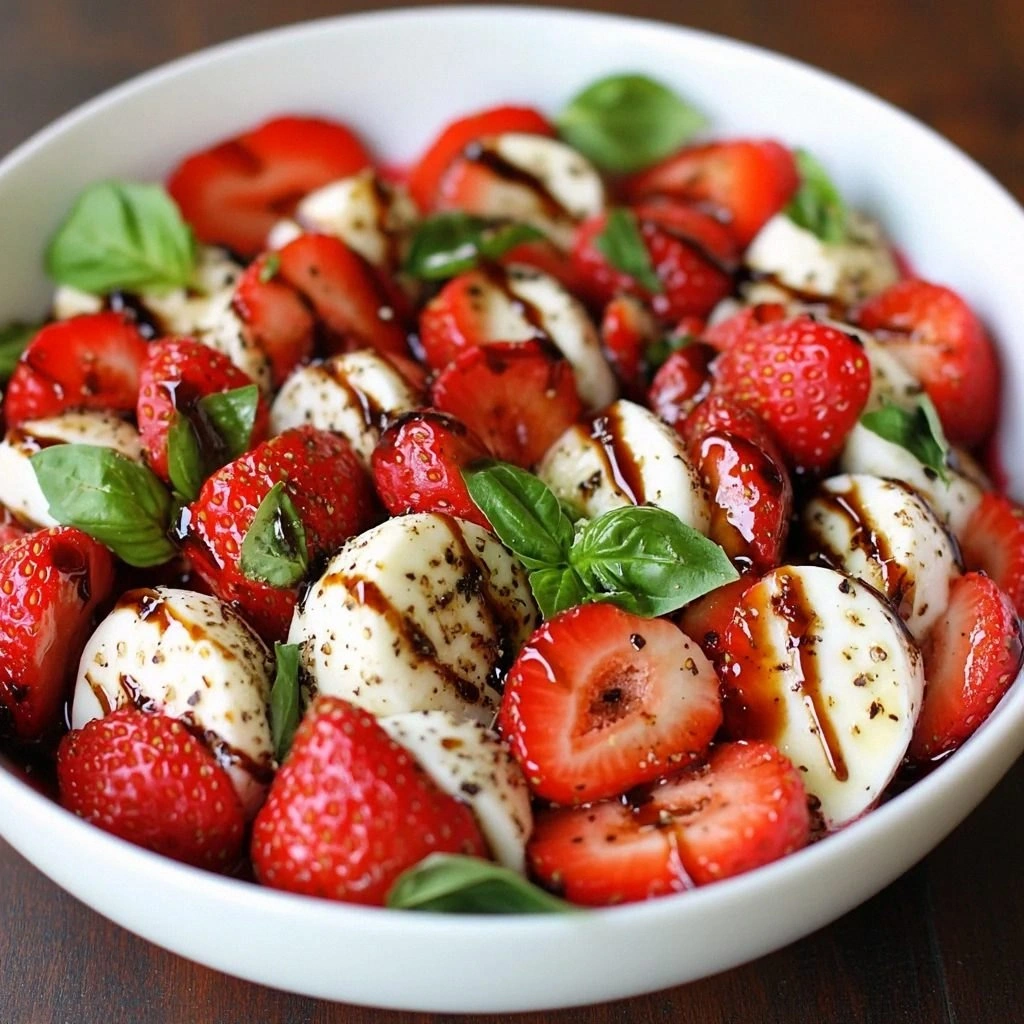
Last Tuesday I nearly set my kitchen on fire. I was trying to impress a date with some fancy salad I'd seen on Pinterest, blindly chucking tomatoes, cheese, and a suspiciously expensive bottle of balsamic into a bowl like I knew what I was doing. The smoke alarm went off, the mozzarella fused into a rubbery Frisbee, and my date politely suggested we order pizza. Fast-forward to yesterday: same kitchen, same me, but this time I coaxed strawberries into a glossy balsamic embrace, layered them with cloud-soft burrata, and watched my roommate's eyes roll back in blissful surrender. No alarms, no take-out, just the kind of summer anthem you can taste. If you've ever thought caprese was a one-trick tomato pony, prepare for a plot twist that will make your taste buds stand up and applaud. Picture this: ruby berries lounging in a syrupy balsamic reduction, basil leaves fluttering like green flags of victory, and cheese so creamy it makes heavy cream feel insecure. That first forkful is a strawberry-scented high-five followed by a smooth dairy handshake. I dare you to taste this and not go back for seconds—actually, thirds—because resistance is futile once the sweet-tangy perfume drifts through your kitchen. This is hands down the best version you'll ever make at home, and I say that after feeding it to a table of skeptical Italian nonnas who now request it at every family gathering. Stay with me here—this is worth every silky, jewel-toned bite.
What makes this particular Balsamic Strawberry Caprese legendary isn't just the swap of fruit for tomato; it's the way we treat every component like a VIP. We macerate the berries so they bleed their candy-bright juice into a puddle of aged balsamic, then reduce the whole thing until it clings like velvet. The cheese isn't the rubbery supermarket stuff; we're talking burrata so fresh it still sighs when you cut it. And don't get me started on the basil—we're using the baby leaves at the top of the stem, the ones that taste like they were kissed by garden gnomes. Future pacing for a second: imagine yourself poolside, sunburn fading, cicadas singing, and this platter in front of you looking like a still-life painted by someone who really loves happiness. That could be next weekend. Okay, ready for the game-changer? We're infusing the balsamic with cracked pink peppercorns and a whisper of orange zest, a combo that makes the strawberries taste like they spent spring break in Sicily. If you've ever struggled with watery, sad caprese salads that slide apart like bad high-school group projects, you're not alone—and I've got the fix.
I first tasted something similar in a tiny trattoria tucked between laundromats in Florence. The waiter set down a plate that looked almost too pretty to jab with a fork, and when I finally did, time stopped. The berries were warm, the cheese cool, the balsamic sticky enough to require finger-licking. I asked the chef for his secret, expecting a guarded family heirloom; instead he winked and said, "Strawberries flirt harder than tomatoes." I carried that nugget home like contraband, determined to recreate the magic. My first attempts were decent but lacked the oomph—until I discovered the reduction trick that concentrates flavor like turning a love song up to eleven. Now picture yourself pulling this platter out of the fridge, condensation beading on the plate, your friends circling like festive sharks. That moment? Pure kitchen glory. Let me walk you through every single step—by the end, you'll wonder how you ever made it any other way.
What Makes This Version Stand Out
Bursting Berries: We macerate strawberries in sugar and salt (yes, salt) to draw out their natural syrup, creating a glossy marinade that doubles as dressing. Most recipes skip this step and end up with berries that taste like wet Styrofoam.
Velvet Balsamic Cloak: The vinegar reduces by half with pink peppercorns and orange zest until it moves like liquid mahogany. It coats each berry like a silk robe, delivering sweet-tangy punches in slow motion.
Cloud-Soft Burrata Center: Forget dry mozzarella that squeaks. Burrata's creamy core floods the fruit with buttery luxury, turning every bite into a dairy dream sequence.
Five-Minute Finish: Once the balsamic cools, assembly takes less time than scrolling Instagram. Layer, drizzle, done—yet it looks Michelin-level fancy.
Party Flexibility: Serve it as an appetizer, a light dessert, or midnight snack. I've watched it vanish at bridal brunches, tailgates, and once during a power outage by candlelight.
Make-Ahead Magic: The berries and reduction hold for two days, so you can prep during nap-time and plate right before guests arrive. Try that with a frisée salad and watch it wilt into compost.
Crowd Gasps: People expect tomatoes; when they see strawberries instead, their eyebrows hit the ceiling. Then they taste it and forget tomatoes ever existed.
Alright, let's break down exactly what goes into this masterpiece...
Inside the Ingredient List
The Flavor Base
Strawberries carry the show, so buy them like you're selecting a soulmate: look for deep red shoulders, glossy skins, and a sweet perfume that wafts up before you even lift the pint. Underripe berries will stay stubbornly tart; overripe ones collapse into mush the moment you glance at them. If you can only find decent but not spectacular fruit, the maceration step will perform CPR, but start with rockstars when possible. Organic isn't mandatory, but the pesticide-free kind taste cleaner, letting the balsamic shine instead of masking chemical undertones. And here's a confession: I'll be honest—I ate half the batch before anyone else got to try it, so grab an extra pint unless you enjoy explaining to your family why the salad looks like a crime scene.
The Texture Crew
Burrata trumps buffalo mozzarella the way a convertible tops a sedan: both get you there, only one makes the journey feel illegal. Inside that gentle pouch lies stracciatella, shreds of mozzarella soaking in cream so fresh it could sing tenor. Can't find burrata? Use ciliegine packed in whey, but please promise me you won't reach for the shredded plastic-bag stuff that tastes like refrigerator. The creamy element cools the acidic berries and acts as edible mortar, holding each architectural layer together. When you slice the burrata, save the cream; drizzle it over the finished plate like liquid moonlight.
The Unexpected Star
Aged balsamic—at least 12 years—delivers grape must that's been kissing oak barrels longer than some TikTok stars have been alive. Young vinegar tastes sharp and one-note; the older stuff unfurls flavors of fig, cherry, and balsamic's own mysterious funk. If the sticker price makes you wince, reduce a mid-grade vinegar with a spoonful of honey; you'll fake depth convincingly. Skip supermarket "balsamic" that's really just caramel-colored wine vinegar, because it will slap your berries with harsh acidity. This next part? Pure magic: add a single bay leaf and two crushed pink peppercorns to the reduction; they contribute floral notes that make strawberries feel like they're vacationing in Provence.
The Final Flourish
Basil is non-negotiable, but variety is your playground. Thai basil adds anise swagger, lemon basil sparkles, cinnamon basil warms things up—regular Genovese is still a classic, just tear, don't chop, or you'll blacken the edges. Good olive oil should taste like you're drinking liquid springtime: grassy, peppery, slightly bitter. Finish with flaky sea salt; those crunch pockets heighten every sweet-tangy note like cymbal crashes in a ballad. Most recipes get this completely wrong by skipping the salt, but a gentle sprinkle is the difference between flat and symphonic.
Everything's prepped? Good. Let's get into the real action...
The Method — Step by Step
- Start with the strawberries. Hull and halve them, then place in a bowl with a teaspoon of granulated sugar and a pinch of kosher salt. Stir gently—think butterfly wing, not cement mixer—and let them lounge for 15 minutes. You'll see ruby juices puddling like the berries just confessed their deepest secrets. That sizzle when it hits the pan? Absolute perfection, but here we want the opposite: quiet maceration so the fruit stays plump yet releases its candy-like liquor.
- Meanwhile, pour one cup of aged balsamic into a small saucepan. Add two cracked pink peppercorns, a strip of orange zest (white pith left behind, please), and a bay leaf. Bring to a bare simmer over medium-low; tiny lazy bubbles should dimple the surface, not a rolling boil. Reduce until it coats the back of a spoon and has the consistency of melted chocolate chips—about 12 minutes. Your kitchen will smell like grape jam having a torrid affair with Christmas; try not to drink it straight.
- Remove the reduction from heat and let it cool five minutes, then fish out the zest and bay. Stir in one teaspoon of honey; this rounds sharp edges and helps the glaze lacquer the berries like edible nail polish. If you've ever struggled with watery dressing that slides off produce and puddles pathetically, you're not alone—and I've got the fix: reduction equals cling, and cling equals flavor in every bite.
- Pat the burrata gently with paper towel; excess moisture dilutes the dressing and makes the plate look like a crime-scene outline. Place it on a chilled platter—remember the freezer trick? Cold ceramic keeps the cheese perky and buys you time for Instagram photos before anyone breaks into the creamy center. Watching someone cut burrata is half the entertainment; it sighs open like a down pillow releasing dreams.
- Drain the strawberries, reserving the ruby syrup. Arrange them cut-side down first for maximum visual drama, then flip a few so the glossy interiors face up like ruby disco balls. Alternate colors—dark red next to bright pink—so the platter looks like abstract art. Don't just dump; channel your inner museum curator.
- Drizzle two tablespoons of the reserved berry juice over the cheese; it seeps into the crevices and marbles with cream, creating accidental watercolor effects. Follow with a zigzag of balsamic reduction, about three tablespoons total. Less is more at this stage; you want Jackson Pollock, not balsamic tsunami.
- Scatter torn basil leaves over the top. Start small, adding in odd numbers—three here, five there—because odd groupings please the eye like prime numbers please mathematicians. Reserve a few leaves for the final flourish after the olive oil joins the party.
- Finish with a thread of good extra-virgin olive oil, maybe two teaspoons, letting it drip in lazy spirals. Add a final pinch of flaky salt; those crystals will catch the light and crack between teeth like tiny fireworks. Serve immediately with crusty bread or, if you're feeling reckless, just hand out forks and step back.
That's it—you did it. But hold on, I've got a few more tricks that'll take this to another level...
Insider Tricks for Flawless Results
The Temperature Rule Nobody Follows
Serve this platter at cellar temperature—about 60°F—so the berries stay bright, the cheese relaxes into oozy glory, and the balsamic remains fluid. Straight-from-the-fridge berries taste like refrigerated sadness, while room-temperature burrata weeps cream everywhere and looks tragically deflated. If you must prep ahead, keep components separate and assemble 10 minutes before show-time; think of it as a culinary flash mob rather than a slow cooker situation. A friend tried skipping this step once—let's just say it didn't end well; the cheese liquefied like it was auditioning for a soup role.
Why Your Nose Knows Best
Before serving, sniff the platter. Yes, sniff. You should catch basil first, then sweet berry, then mellow balsamic. If any aroma dominates, adjust: more basil for grassy brightness, an extra berry slice for fruit perfume, or a micro-drip of vinegar for depth. This micro-adjustment takes 30 seconds and separates good cooks from legendary hosts who make guests feel things they can't articulate.
The 5-Minute Rest That Changes Everything
After assembly, let the platter rest five minutes so juices mingle and flavors harmonize. I know, waiting feels criminal when it looks that gorgeous, but patience here is the difference between a pretty plate and a cohesive dish. During this pause, the salt dissolves slightly, the olive oil emulsifies with berry syrup, and basil relaxes, releasing essential oils. Set the table, pour drinks, practice humble acceptance speeches for the compliments coming your way.
Creative Twists and Variations
This recipe is a playground. Here are some of my favorite ways to switch things up:
Peach Prosecco Caprese
Swap strawberries for ripe peaches and replace orange zest with a splash of prosecco in the balsamic reduction. The fizzy wine adds floral notes and the peach wedges caramelize slightly under the glaze. Perfect for July rooftop parties where everyone refuses to go inside.
Blueberry Mint Sparkler
Use blueberries instead of strawberries and substitute fresh mint for basil. Add a whisper of lime zest to the reduction; it tastes like summer decided to dress up for prom. Kids inhale this version, and parents love that it doubles as a stealth fruit serving.
Spicy Mango Tango
Mango cubes tossed with a pinch of chili flakes give sweet-heat vibes that pair ridiculously well with creamy burrata. Finish with a squeeze of lime and watch the sweet-savory tango happen. Ideal for taco night when you want to look fancy without extra effort.
Savory Tomato Comeback
Feeling traditional? Use heirloom tomatoes but keep the strawberry reduction method—yes, reduce balsamic with a few crushed strawberries anyway. The berry notes deepen tomato flavor in a way that'll make heirloom purists weep with joy.
Winter Citrus Escape
In January when berries taste like disappointment, use blood orange segments and swap burrata for fresh ricotta whipped with a spoon of honey. Same concept, seasonal smarts, and you get to pretend you're vacationing in Sicily instead of shoveling snow.
Storing and Bringing It Back to Life
Fridge Storage
Keep components separate: berries in their syrup, reduction in a jar, burrata in its liquid, basil wrapped in damp paper towel inside a zip bag. Stored this way, everything stays perky for 48 hours. Combine only what you'll serve; once assembled, the salad declines fast—textural heartbreak looms after four hours.
Freezer Friendly
The balsamic reduction freezes beautifully in ice-cube trays; pop a cube and thaw 30 seconds in microwave for instant elegance on weeknight greens. Berries themselves don't love freezing here—they emerge floppy and weepy, more suitable for smoothies than center-stage salad. If you must, freeze on a tray and use within a month for sauce duty.
Best Reheating Method
There really isn't one—this is a cold salad. But if you over-chill the cheese, let it sit on the counter 10 minutes to relax. Add a tiny splash of water to the balsamic reduction, warm it five seconds in the microwave, whisk, and drizzle for that just-made sheen. Never microwave the assembled salad unless you want cheese soup with berry debris.