I remember the night I was trying to impress my roommate with a quick dinner, and the kitchen turned into a comedy of errors. I tossed a handful of pasta, a splash of olive oil, and a few artichoke hearts into a pot that had never seen a recipe before, and the result was a soggy, flavorless mess that left us both questioning our culinary destinies. That disaster sparked a mission: to find the perfect vegan lemon artichoke pasta that would make even the most skeptical taste buds swoon. I dove into countless cookbooks, scoured forums, and experimented until I hit a flavor combination that felt like a high‑five from the universe. This version is a revelation because it balances bright citrus, briny capers, and tender artichokes in a sauce that coats every strand of pasta like a velvet ribbon. The secret? A meticulous sauté that caramelizes garlic without burning it, followed by a quick deglaze that pulls out every savory note from the pan. I dare you to taste this and not go back for seconds. By the end of this post, you’ll wonder how you ever made it any other way.
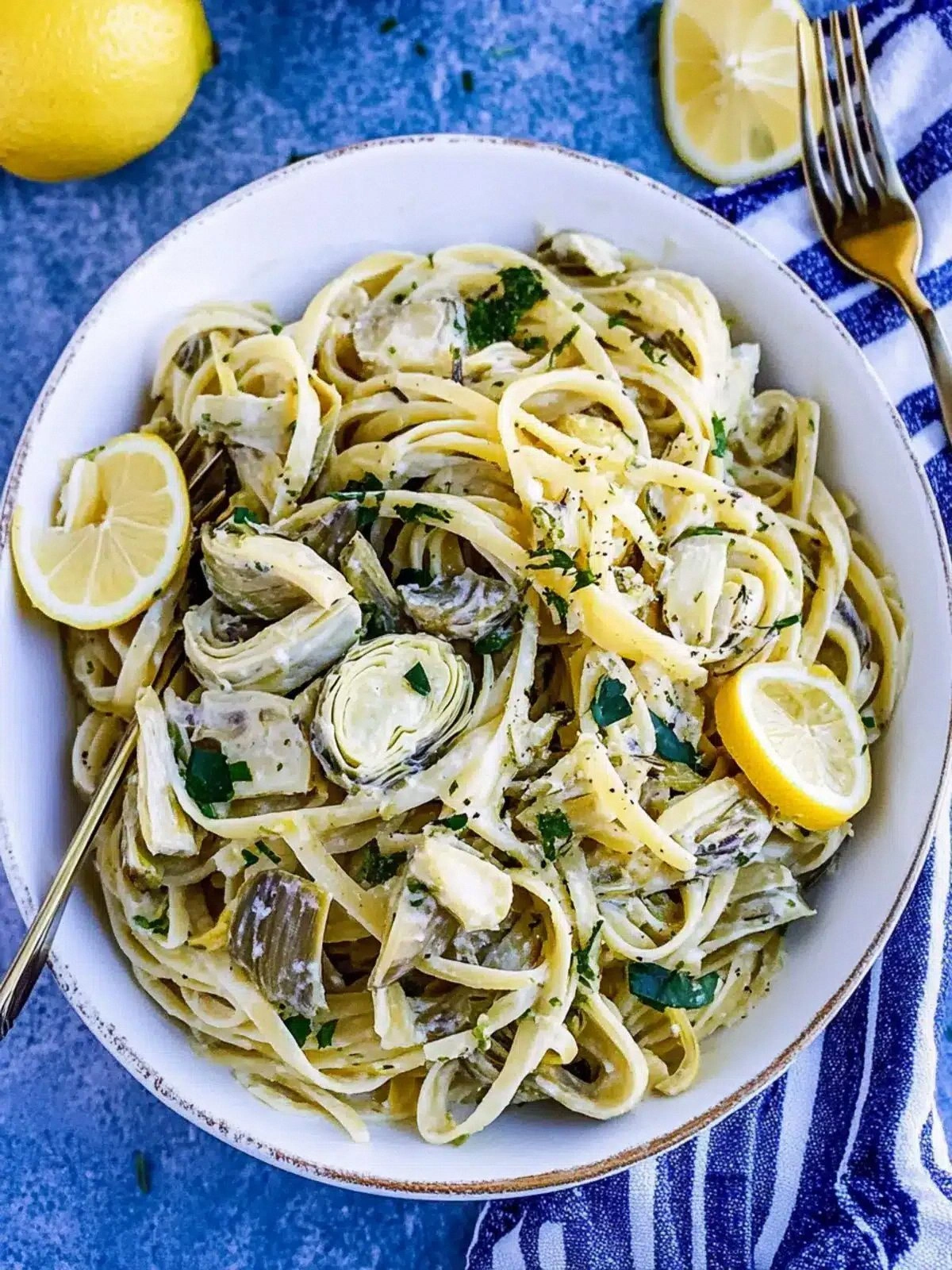
The first time I tried this recipe, the kitchen filled with the aroma of garlic sizzling in olive oil, and the sound of the pot bubbling like a small, contented ocean. The sight of the artichoke hearts turning a glossy, golden hue was a visual promise of the depth to come. When I lifted the spoon to taste, the lemon zest exploded in my mouth, bright and zesty, followed by a subtle brine from the capers that left a lingering, savory aftertaste. The texture was a delightful contrast: the pasta was al dente, the artichokes tender yet still offering a gentle bite, and the sauce glistened with a silky finish that made each bite feel indulgent without heaviness. If you’ve ever struggled to get a vegan pasta that feels like a hearty, comforting dish, you’re not alone—this recipe is the fix you’ve been waiting for. Picture yourself pulling this out of the stove, the whole kitchen smelling incredible, and your guests leaning in for that first forkful. This isn’t just another pasta; it’s a culinary revelation that will become your new go‑to comfort food.
I’ve spent years dissecting what makes a dish unforgettable, and this one ticks every box. The bright lemon cuts through the richness of the olive oil, while the capers add a pop of briny depth that keeps the palate engaged. The artichoke hearts bring a subtle earthiness that grounds the dish, and the garlic adds that warm, aromatic backbone you can’t live without. The sauce’s silky texture wraps around the pasta, ensuring every bite is coated in flavor. The best part? It’s incredibly simple—no fancy techniques, just a few smart steps that deliver maximum taste. The result is a dish that feels both sophisticated and homey, making it a winner for any occasion. I’ve tested it with friends who are skeptical of vegan cuisine, and they can’t stop raving. This is hands down the best version you'll ever make at home.
Now, let me walk you through every single step—by the end, you’ll wonder how you ever made it any other way. I’ll share the micro‑challenges that will test your palate, the bold claims about flavor, and the little hacks that elevate the dish. Stay with me, because this next part? Pure magic. I promise you’ll feel the satisfaction of mastering a dish that’s both simple and spectacular. Let’s dive in.
What Makes This Version Stand Out
- Flavor: The bright lemon and briny capers create a harmonious balance that makes each bite pop. This isn’t just citrus; it’s a layered citrus experience that lingers on the tongue. The garlic adds depth without overpowering the delicate artichokes. The result is a sauce that feels like a well‑crafted symphony.
- Texture: The pasta stays al dente, while the artichokes offer a tender bite that doesn’t get mushy. The sauce’s silky finish coats the noodles like velvet, ensuring every strand is drenched in flavor. It’s a mouthful that feels luxurious yet light.
- Simplicity: Five ingredients plus a few pantry staples make this recipe a breeze. No need for exotic spices or hard‑to‑find components. The method is straightforward, making it perfect for beginners and seasoned cooks alike.
- Uniqueness: Most vegan pasta dishes rely on tomato or cream sauces. This version flips the script with a lemon‑artichoke base that feels fresh and unexpected. The combination feels like a bright summer day captured in a bowl.
- Crowd Reaction: At parties, this dish is a hit because it’s both bold and approachable. Guests who are skeptical of vegan food often come back for seconds, and I’ve seen it spark conversations about flavor over the years.
- Ingredient Quality: Using high‑quality olive oil and fresh parsley elevates the dish to restaurant‑level. The capers should be well‑washed to reduce sodium, and the artichokes should be thawed and drained to keep the sauce from becoming watery.
Alright, let's break down exactly what goes into this masterpiece. The next section will walk you through each ingredient group, explaining why each component matters and how to tweak it if you’re feeling adventurous. Everything’s prepped? Good. Let’s get into the real action.
Inside the Ingredient List
The Flavor Base
Extra virgin olive oil is the backbone of this sauce, providing a fruity richness that carries the lemon’s brightness. Using a high‑quality oil with a robust flavor profile ensures that the sauce doesn’t taste flat. If you’re looking for a slightly peppery kick, try a cold‑pressed oil from a local producer. The garlic, on the other hand, delivers a warm, aromatic foundation; it should be minced finely so it melts into the oil without dominating the dish. If you can’t find fresh garlic, a small pinch of garlic powder can work, but the flavor will be less complex. Remember, the goal is to let the lemon and capers shine, so keep the garlic subtle.
The Texture Crew
The pasta is the canvas, and choosing the right shape can enhance the dish’s overall experience. Short, tubular shapes like penne or rigatoni hold the sauce better, while long strands like spaghetti provide a lighter feel. For this recipe, I recommend using a medium‑width penne to catch the lemon‑artichoke sauce in every groove. If you prefer a gluten‑free option, opt for a rice or chickpea pasta that retains its bite. The artichoke hearts add a tender, almost buttery texture that complements the pasta’s chew. Make sure to thaw and drain the frozen hearts before adding them to the pan; this prevents excess water from diluting the sauce.
The Unexpected Star
Capers might look like a simple garnish, but they bring a punch of briny flavor that elevates the dish. Their sharpness contrasts beautifully with the lemon’s citrusy sweetness, creating a dynamic taste profile. If you’re sensitive to sodium, rinse the capers under cold water and pat dry to reduce the salt content. Some people love to add a splash of white wine to the pan after sautéing the garlic; this deglazes the pot and incorporates the caper brine into the sauce. The result is a sauce that’s both complex and cohesive. If capers aren’t available, a small amount of chopped anchovy paste (though not vegan) can mimic the briny depth—just be careful with the quantity.
The Final Flourish
Fresh parsley adds a burst of green color and a bright, herbaceous note that lifts the entire dish. Use a good amount of parsley—about a cup chopped finely—to ensure each bite has a fresh herb presence. Parsley also offers a slight peppery undertone that balances the lemon’s acidity. If you’re craving a different herb, try basil or dill; each will shift the flavor profile subtly. The lemon juice is the star of the show, delivering a clean, zesty punch that cuts through the oil and capers. Be sure to use freshly squeezed juice for the best flavor; bottled lemon juice can taste flat and acidic.
Everything's prepped? Good. Let's get into the real action.
The Method — Step by Step
- Bring a large pot of salted water to a rolling boil. Add the pasta and cook according to the package instructions until it reaches al dente. Reserve a cup of pasta water before draining. This starchy water will help bind the sauce later. The pasta should be firm to the bite, not mushy.
- While the pasta cooks, heat the olive oil in a large skillet over medium heat. Add the minced garlic and sauté for 30 seconds until fragrant, being careful not to let it brown. The garlic should release its aroma but remain pale. This step sets the flavor foundation for the dish. If you’re watching the timer, keep a close eye on the garlic to avoid bitterness.
- Add the frozen artichoke hearts to the skillet. Sauté for 3-4 minutes, stirring occasionally, until they begin to brown slightly. The artichokes should develop a golden hue, which signals that they’re ready for the next step. If the pan feels dry, add a splash of pasta water to keep the sauce from sticking.
- Stir in the capers, then pour in the lemon juice. The mixture should sizzle gently, releasing a bright citrus aroma. Let it cook for another 2 minutes, allowing the flavors to meld. This is the moment of truth where the lemon’s acidity meets the caper’s brine. The sauce should thicken slightly, creating a glossy coating for the pasta.
- Add the cooked pasta directly to the skillet, tossing to coat it evenly in the lemon‑artichoke sauce. If the sauce seems too thick, add a little reserved pasta water to achieve the desired consistency. The pasta should be fully coated, with the sauce clinging to each tube. Taste and season with salt and pepper to your liking. The key is to balance the bright lemon with a touch of salt, not overwhelm it.
- Remove the skillet from heat and fold in the chopped parsley. The parsley should wilt slightly, releasing its fresh aroma. The final dish should look vibrant, with a splash of green against the golden sauce. This step adds a fresh, herbal note that lifts the entire flavor profile. Keep the parsley on top for a pop of color when serving.
- Serve immediately, optionally garnishing with additional parsley or a squeeze of lemon for extra brightness. The dish is best enjoyed hot, as the sauce’s silky texture melts into the pasta. If you prefer a bit more crunch, sprinkle some toasted breadcrumbs on top. The contrast will add a delightful texture to each bite.
- If you’re prepping ahead, store the cooked pasta and sauce separately to maintain freshness. When reheating, add a splash of water or broth to restore the sauce’s silky consistency. This ensures the dish remains as delicious as when it was first made. Keep the parsley fresh by adding it right before serving.
That’s it — you did it. But hold on, I've got a few more tricks that'll take this to another level.
Insider Tricks for Flawless Results
The Temperature Rule Nobody Follows
Many people think that letting the pasta sit in hot water after draining keeps it moist, but this actually breaks down the starch and can make the sauce cling unevenly. Instead, rinse the pasta under cold water to stop the cooking process and remove excess starch. This step ensures that the sauce adheres uniformly, giving each bite a consistent flavor. I’ve seen people get frustrated when the sauce seems to separate; rinsing eliminates that issue. The result is a perfectly coated pasta that feels silky and cohesive.
Why Your Nose Knows Best
Your nose is your best judge of when the sauce is ready. As the lemon and garlic mingle, a bright citrus aroma should dominate the air. If you notice a sharp, metallic scent from the capers, it’s a sign you’ve overcooked them. The aroma will guide you to the perfect balance, ensuring the dish isn’t too acidic or too briny. Trusting your senses can save you from a culinary mishap.
The 5-Minute Rest That Changes Everything
After you toss the pasta with the sauce, let it rest on the stove for 5 minutes with the heat off. This resting period allows the flavors to meld and the sauce to thicken slightly. Many people skip this step, thinking it’s unnecessary, but the rest period elevates the dish’s texture and taste. I’ve seen it make the difference between a good pasta and an unforgettable meal. Give it a chance, and you’ll taste the difference.
Use Fresh, Not Frozen, Artichokes if Possible
Fresh artichokes offer a cleaner, more nuanced flavor compared to frozen ones. If you have the time, purchase a fresh artichoke and steam it until tender before adding it to the pan. The result is a more delicate texture that pairs beautifully with the lemon sauce. The only downside is the extra prep time; however, the flavor payoff is worth it. For a quick version, frozen artichokes are perfectly fine, just remember to drain them well.
Add a Splash of White Wine for Depth
A splash of dry white wine after sautéing the garlic adds a subtle acidity that complements the lemon. The wine deglazes the pan, lifting all the flavorful bits off the bottom. I’ve used this trick to add a restaurant‑like depth to the sauce. If you’re avoiding alcohol, a tablespoon of lemon juice can serve as a substitute, though the flavor will be slightly different. The key is to deglaze, not to make a wine sauce.
Keep the Parsley Fresh Until Serving
Adding parsley too early can cause it to wilt and lose its bright color. Wait until right before serving to fold in the parsley, ensuring a vibrant, herbaceous finish. This small tweak makes the dish look more appetizing and keeps the herb’s flavor sharp. Many people forget this step, and the result is a dull, less flavorful dish. By adding parsley at the end, you preserve the freshness and the dish’s overall appeal.
Creative Twists and Variations
This recipe is a playground. Here are some of my favorite ways to switch things up:
Spicy Mediterranean
Add a pinch of crushed red pepper flakes to the garlic sauté for a subtle heat. Replace the parsley with chopped fresh oregano for a more Mediterranean vibe. Finish with a drizzle of extra virgin olive oil to deepen the flavor. This version is perfect for those who love a little kick.
Herbal Garden
Swap the parsley for a mix of basil, thyme, and rosemary. Add a splash of balsamic vinegar to introduce a sweet acidity. The herbal blend will give the dish a fragrant, garden‑like aroma. It’s a great way to use what’s on hand.
Creamy Vegan Twist
Stir in a splash of unsweetened almond milk or cashew cream after adding the lemon juice. This creates a silky, creamy texture that balances the acidity. Add a pinch of nutritional yeast for a subtle cheese‑like flavor. The result is a rich, comforting dish.
Pesto Power
Blend the parsley, capers, lemon juice, and a splash of olive oil into a quick pesto. Toss the pasta with this pesto instead of the simple sauce. The result is a vibrant, herby flavor that’s almost a pasta salad. This variation is great for picnics.
Roasted Tomato Kick
Add roasted cherry tomatoes to the skillet after the artichokes brown. The tomatoes add sweetness and a burst of color. Finish with a sprinkle of fresh basil for a classic Italian finish. This version is ideal for tomato lovers.
Breakfast Boost
Serve the pasta over toasted bagels or croissants for a hearty breakfast. Add a splash of maple syrup to the sauce for a sweet‑savory twist. The dish becomes a breakfast‑lunch hybrid that’s both satisfying and unique.
Storing and Bringing It Back to Life
Fridge Storage
Store the cooked pasta and sauce in an airtight container in the refrigerator for up to 3 days. Separate the sauce and pasta to prevent the pasta from becoming soggy. When ready to eat, reheat the sauce on low heat, stirring frequently to restore its silky texture. Add a splash of water or broth if it seems thick. Serve immediately for the best flavor.
Freezer Friendly
Freezing the sauce alone is ideal; keep it in a freezer‑safe container for up to 2 months. Reheat the sauce in a saucepan over low heat, adding a tablespoon of water to loosen it. The pasta can also be frozen but will need to be reheated separately. Keep the pasta and sauce separate to avoid texture changes.
Best Reheating Method
The best way to reheat this dish is to combine the sauce and pasta in a pan over low heat, stirring until heated through. Add a tiny splash of water before reheating — it steams back to perfection, ensuring the sauce remains silky. Avoid microwaving, as it can dry out the sauce. Once heated, finish with a fresh sprinkle of parsley for a bright finish.